Why Are Seemingly Fit Young Adults Collapsing During Workouts
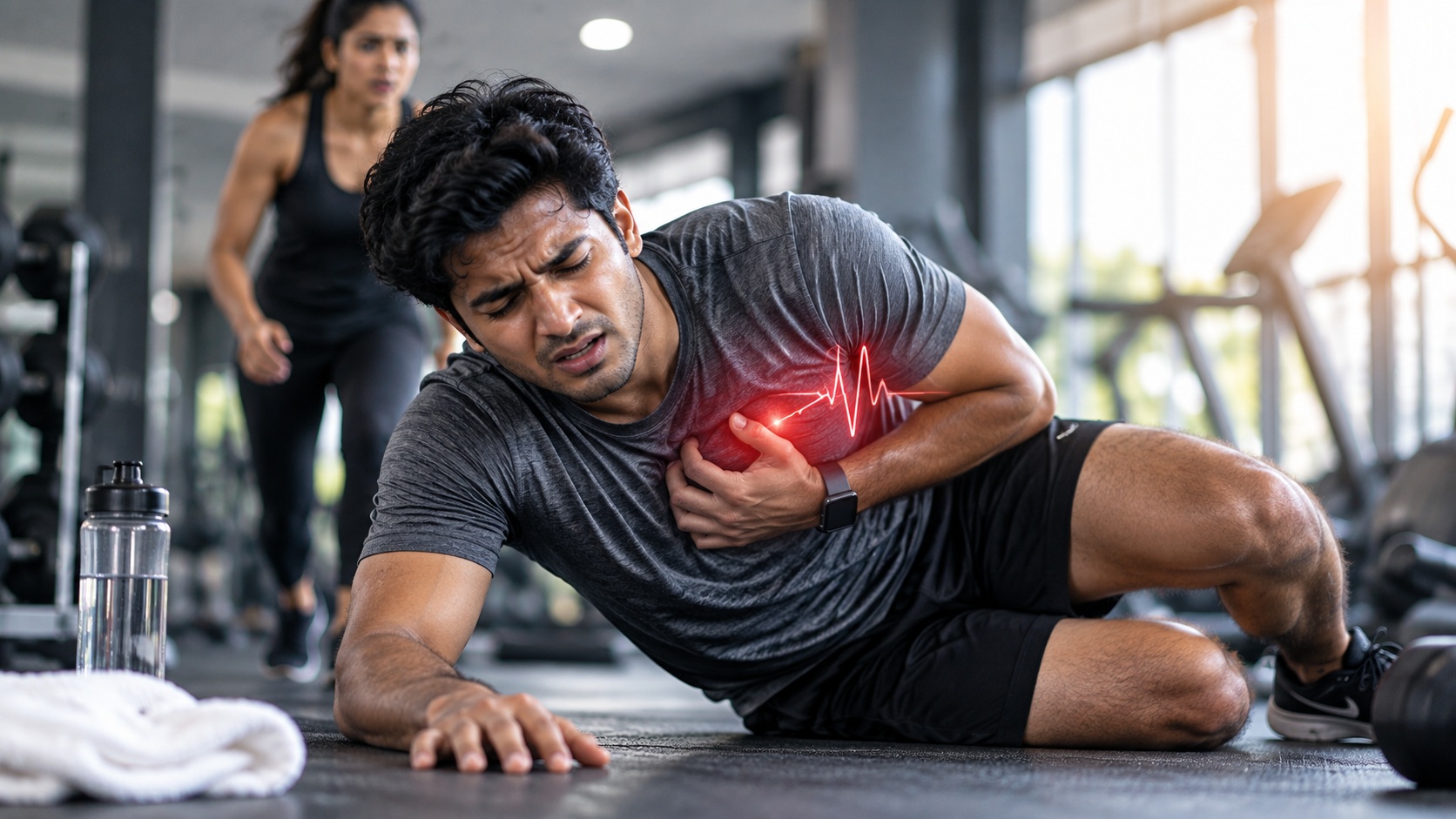
September 16, 2026Fitness is important, but exercising safely is even more important. Take care of your heart and stay fit.
Heart attack or cardiac arrest among young Indians or people in their thirties to forties during workout or in gym happens mostly due to the intense exercise that may trigger hidden or undiagnosed heart related problems or subtle heart symptoms that we often ignore and get aggravated due to physical exertion during intense exercises. It is very important to avoid self-medication and not ignoring various health symptoms like feeling lightheaded, slight chest pain, breathlessness, extreme fatigue, cold sweating or heavy sweating and taking muscle building or gym performance enhancement supplements without proper medical advice. It is best to take medical advice and consult with a cardiologist and follow medical advice.
Hidden Heart Conditions
Hypertrophic Cardiomyopathy: This is a genetic condition where there happens a thickening of heart muscles and it shows no symptoms at rest or during usual activities but triggers dangerous or fatal level of heart rhythm during intense workouts.
Silent Artery Blockages: Lean and looking fit people may also artery blockages due to various reasons – mostly, genetics, bad eating habits, stress, that accelerate plaque building up inside arteries.
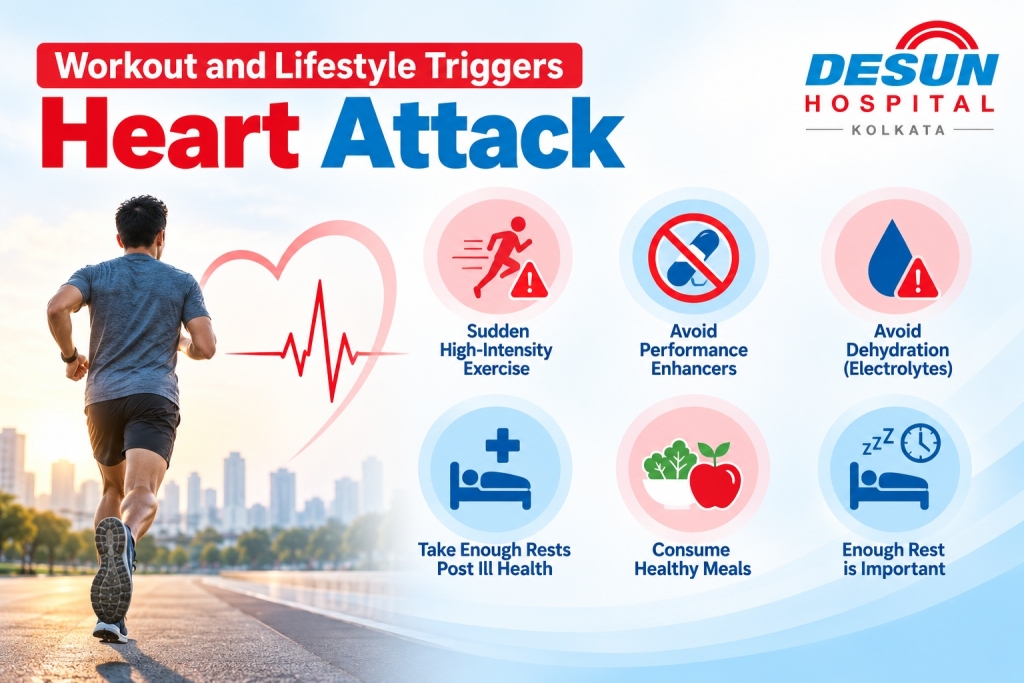
Workout and Lifestyle Triggers
Sudden High-Intensity Exercise
Avoid Performance Enhancers
Avoid Dehydration Electrolytes (do take medical advice)
Take Enough Rests Post Ill Health Before getting back to Workout
Consume Healthy Meals (if required take advice from doctor or dietician)
Enough rest (sleep and post workout) is important
Healthy lifestyle, proper diet and rest, stress management and avoiding self-medication etc can help reduce chances of heart attack or cardiac arrest during workout in gym. Do consult with cardiologist and follow medical advice and undergo health checks as recommended by doctor before joining a gym or workout session. In case there are of the symptoms it is best to consult with heart specialist.
Recognising the subtle warning signs of cardiac stress during or after a workout can save your life. Many gym-goers mistakenly dismiss these early symptoms as a normal part of pushing through a hard session or getting older.
During the Workout (Acute Symptoms)
Unusual Shortness of Breath
Panting or struggling to breathe with usual activities like climbing 1-2 flight of stairs
Recurring chest discomfort
Do not ignore the subtle feeling of pressure, fullness, squeezing, or a mild burning in the centre of your chest especially with exertion.
Mild chest pain and pain moving from around centre or left of chest to shoulders, hands, jaws while lifting weight or training hard. Do not ignore the radiating pain.
Sudden Dizziness or Light headedness during workout
Feeling weak at legs during workout especially with weight training or exertion
Cold Sweats
A feeling of nausea
Post Workout (Chronic Signs)
Unexplained Performance Drop: A drop in the strength, stamina, endurance and quickly getting back breath post some activities over a few weeks despite proper nutrition and rest.
Rapid or Irregular Heartbeats (Palpitations): Feeling your heart fluttering, racing, or skipping beats while resting, or a heart rate that stays elevated for hours after a workout.
Extreme, Persistent Fatigue: Feeling completely drained or exhausted the day after a workout, far beyond normal muscle soreness or typical physical tiredness.
Slow Start and Warm Up (To Prevent Acute Stress)
Avoid giving a sudden jerk to cardiovascular system with quick spikes in intensity:
Gradual Warm-Up: Spend 10 minutes progressively raising your heart rate before heavy lifts or sprints to prevent sudden blood pressure spikes.
Rate of Perceived Exertion (RPE): Keep most training at an RPE of 7–8 out of 10. Avoid training to absolute failure on every single set.
Heart Rate Tracking: Use a wearable monitor to stay within your safe target heart rate zone (generally below 220 - age).
Expert Opinion
“Sudden collapse during a workout should never be dismissed simply because a person appears young and fit. In some individuals, an undiagnosed heart condition such as an abnormal heart rhythm, cardiomyopathy or a congenital coronary artery abnormality may remain silent until intense physical activity triggers a serious cardiac event. Warning signs such as unexplained fainting, chest discomfort, unusual breathlessness, dizziness or a racing heartbeat during exercise should not be ignored. A family history of sudden cardiac death is another important red flag. While regular exercise is highly beneficial for heart health, people with symptoms or relevant risk factors should undergo appropriate cardiac evaluation before engaging in strenuous workouts.”-Consultant Cardiologist -Desun Hospital, Kolkata
Preventive cardiac Care - Cardiac Emergency at Desun Hospital
Desun Hospital provides 24/7 advanced cardiac care, ranging from routine preventive checkups to emergency open-heart surgeries.
Here is a detailed breakdown of the cardiac services available at the hospital:
Preventive Cardiac Care
Routine Assessments: Baseline checks like Electrocardiograms (ECG) and Chest X-rays monitor resting heart rhythms.
Stress Testing: Treadmill Tests (TMT) and Echocardiograms (ECHO) measure how your heart behaves under physical stress.
Risk Profiling: Complete Lipid Profiles check different types of cholesterol to track arterial fat buildup.
Organ Monitoring: Integrated Blood Sugar (Fasting and PP), HbA1c, and Liver Function Tests (LFT) screen for underlying conditions that put stress on your heart.
Specialized Checkups: Structured packages like the Regular and Advanced Cardiac Check combine these tests with professional medical advice.
Cardiac OPD (Outpatient Department)
Expert Consultations: Access to experienced Interventional Cardiologists and Cardiothoracic Surgeons for heart condition advice.
Dedicated Help Desks: Staff help patients coordinate multiple diagnostic tests and specialist visits in one trip.
Second Opinions: Consultations to review medical history, external test results, and determine if surgeries are truly necessary.
Post-Op Follow-ups: Regular outpatient tracking for patients recovering from angioplasties or bypass operations.
Modern and Predictive Heart Tests
ApoA1 & ApoB Super-specialty Test: A specialized blood ratio test that helps to interpret a chance of heart problem in near future based on some parameters.
192-Slice Cardiac CT: A high-speed, detailed imaging system that tracks coronary blockages without invasive procedures.
Advanced Ultrasound Imaging (IVUS): Intravascular Ultrasound uses sound waves inside blood vessels to see clear images of artery walls.
High-Resolution Light Scans (OCT): Optical Coherence Tomography uses light to take high-definition pictures inside the arteries for precise stent placement.
Blood Flow Measurement (FFR): Fractional Flow Reserve tests map out exactly how much a blockage is slowing down your actual blood flow.
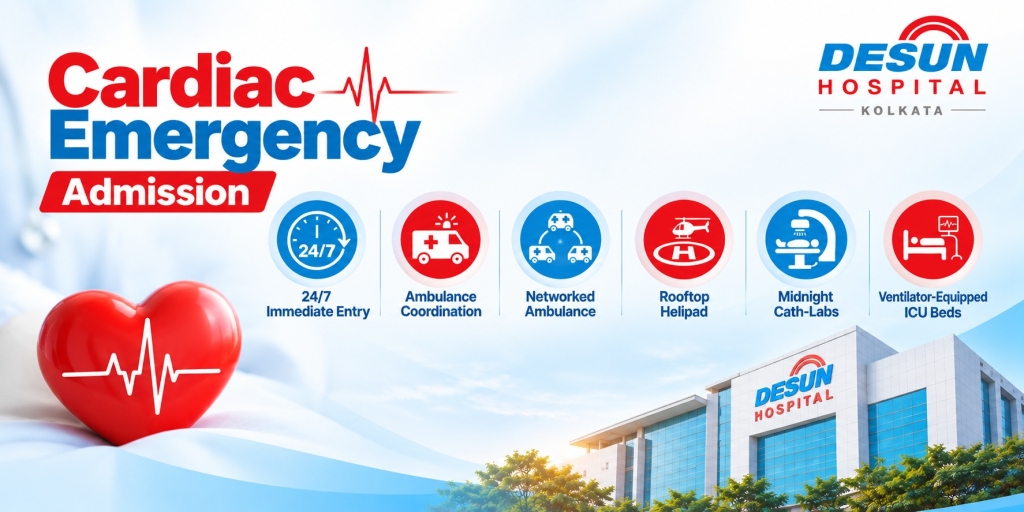
Cardiac Emergency Admission
24/7 Immediate Entry: A zero-delay intake process for life-threatening events like sudden heart attacks or chest pain.
Ambulance Coordination: Networked ambulance services that track across Kolkata and West Bengal to stabilize patients on the move.
Rooftop Helipad: India's first hospital-based rooftop helipad, ensuring rapid transfer for critical trauma and heart cases.
Midnight Cath-Labs: Operable Catheterization Labs running 24 hours a day for immediate Angiograms and Primary Angioplasties.
94 Ventilator-Equipped ICU Beds:Intensive care units where every single bed features an individual ventilator for respiratory backup.
Cardiac Surgeries
Heart Bypass Surgery (CABG): Traditional and advanced bypass surgeries that build new paths around blocked arteries.
Robotic and Minimally Invasive Surgery: Utilizing smaller cuts via procedures like HEARTPORT to speed up recovery times.
Valve Repairs and Replacements: Replacing damaged heart valves with long-lasting artificial or tissue valves.
Pacemaker Installations: Placing single-chamber or advanced pacemaker devices to correct erratic heartbeats.
Advanced Clearing (Atherectomy & IVL): Using tools like Rotational Atherectomy or Intravascular Lithotripsy (shockwaves) to break up hard calcium blockages before placing stents.
Enjoy your workout and stay healthy. Be alert about any unusual or subtle symptom and do take suitable medical guidance and do not overexert yourself.
 90 5171 5171
 Fitness is important, but exercising safely is even more important. Take care of your heart and stay fit.