Laparoscopic vs Robotic Surgery
July 22, 2026
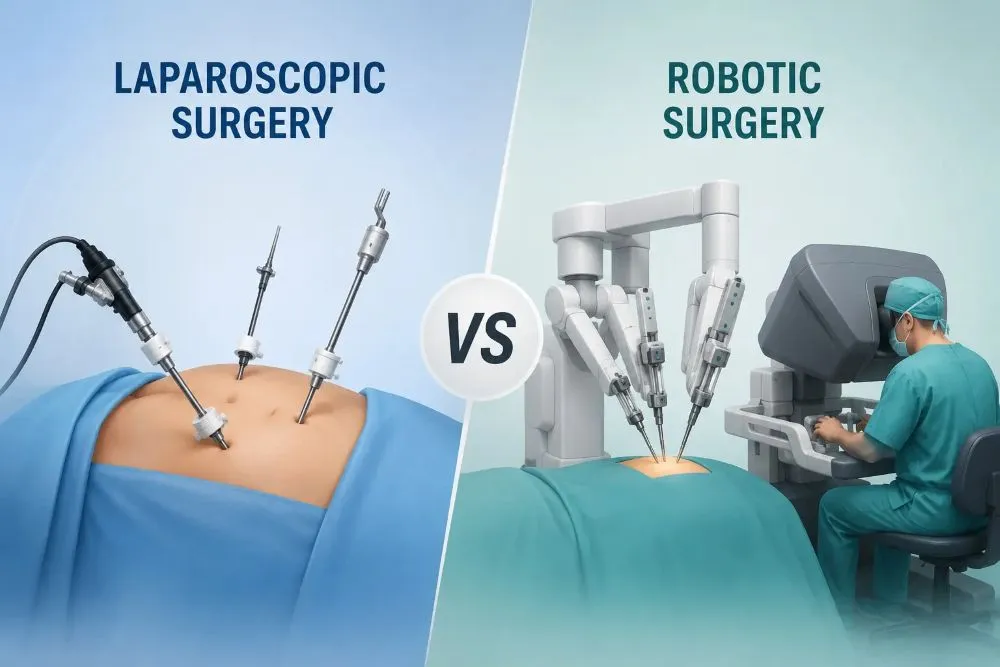
Robotic-assisted surgery is particularly beneficial for selected complex procedures that require enhanced precision, meticulous suturing and improved manoeuvrability in deep or confined anatomical spaces. Its high-definition three-dimensional visualisation, wristed instruments with an extended range of motion and ergonomic design can assist surgeons in performing technically demanding operations with greater ease. However, the choice of robotic surgery depends on the patient's condition, the complexity of the procedure and the surgeon's clinical judgement.
Complex Anatomical and Reconstructive Procedures
Deep Pelvic Surgery
Robotic-assisted surgery may offer advantages during procedures performed within the narrow confines of the pelvis, where precise dissection around delicate nerves and blood vessels is essential.
Typical examples of Deep Pelvis Surgery are:
- Radical prostatectomy for prostate cancer
- Surgical management of deep infiltrating endometriosis
- Low anterior resection for rectal cancer
Complex Reconstructive Surgery
Procedures requiring intricate intracorporeal suturing or reconstruction may benefit from the enhanced dexterity and precision offered by robotic instruments.
Some examples of Complex Reconstructive Surgery are:
- Robotic pyeloplasty for ureteropelvic junction (UPJ) obstruction
- Selected reconstructive urological procedures
- Complex gastrointestinal reconstructive surgery
Head and Neck Surgery
Transoral Robotic Surgery (TORS) enables surgeons to access selected tumours of the oropharynx, base of the tongue and tonsils through the mouth without large external incisions. This minimally invasive approach may reduce tissue disruption and aid recovery in appropriately selected patients.
Complex Gynaecological Surgery
Robotic-assisted surgery may be considered for technically demanding gynaecological procedures, including:
- Large uterine fibroids
- Severe pelvic adhesions from previous surgeries
- Deep infiltrating endometriosis
- Selected gynaecological cancers requiring radical surgery and lymph node dissection
- Pelvic floor reconstruction procedures such as sacrocolpopexy
Expert Opinion
"Both laparoscopic and robotic surgery are advanced minimally invasive techniques that offer benefits such as smaller incisions, less pain, reduced blood loss, shorter hospital stays, and faster recovery compared to traditional open surgery. The choice between the two depends on several factors, including the patient's condition, the complexity of the procedure, and the surgeon's expertise. Robotic surgery provides enhanced precision, greater flexibility, and high-definition 3D visualization, which can be particularly beneficial for complex procedures. The most important goal is to choose the approach that ensures the safest and most effective outcome for each patient."
-Consultant Robotic Surgeon
Desun Hospital, Kolkata
Patient Profiles That May Benefit
Patients with Higher Body Mass Index (BMI)
In selected patients with obesity, robotic-assisted surgery may provide improved instrument manoeuvrability and better access to deep anatomical structures. These features can facilitate complex minimally invasive procedures while improving surgeon ergonomics.
Cancer Patients Requiring Precise Nerve Preservation
During certain
cancer surgeries, such as radical prostatectomy or selected rectal cancer procedures, surgeons operate in close proximity to nerves that influence urinary and sexual function. The magnified three-dimensional visualisation and enhanced instrument articulation available with robotic systems may assist in meticulous dissection where clinically appropriate. However, successful nerve preservation depends on multiple factors, including tumour location, disease stage and the experience of the surgical team.
 90 5171 5171