
Advanced. Precise. Patient-Centric.
Robotic General & Gastrointestinal (GI) Surgery represents the next generation of minimally invasive surgical care. Using advanced robotic systems, Surgeons can perform complex abdominal and digestive system procedures with enhanced precision, flexibility, and control—ensuring safer outcomes and faster recovery for patients.
Book Consultation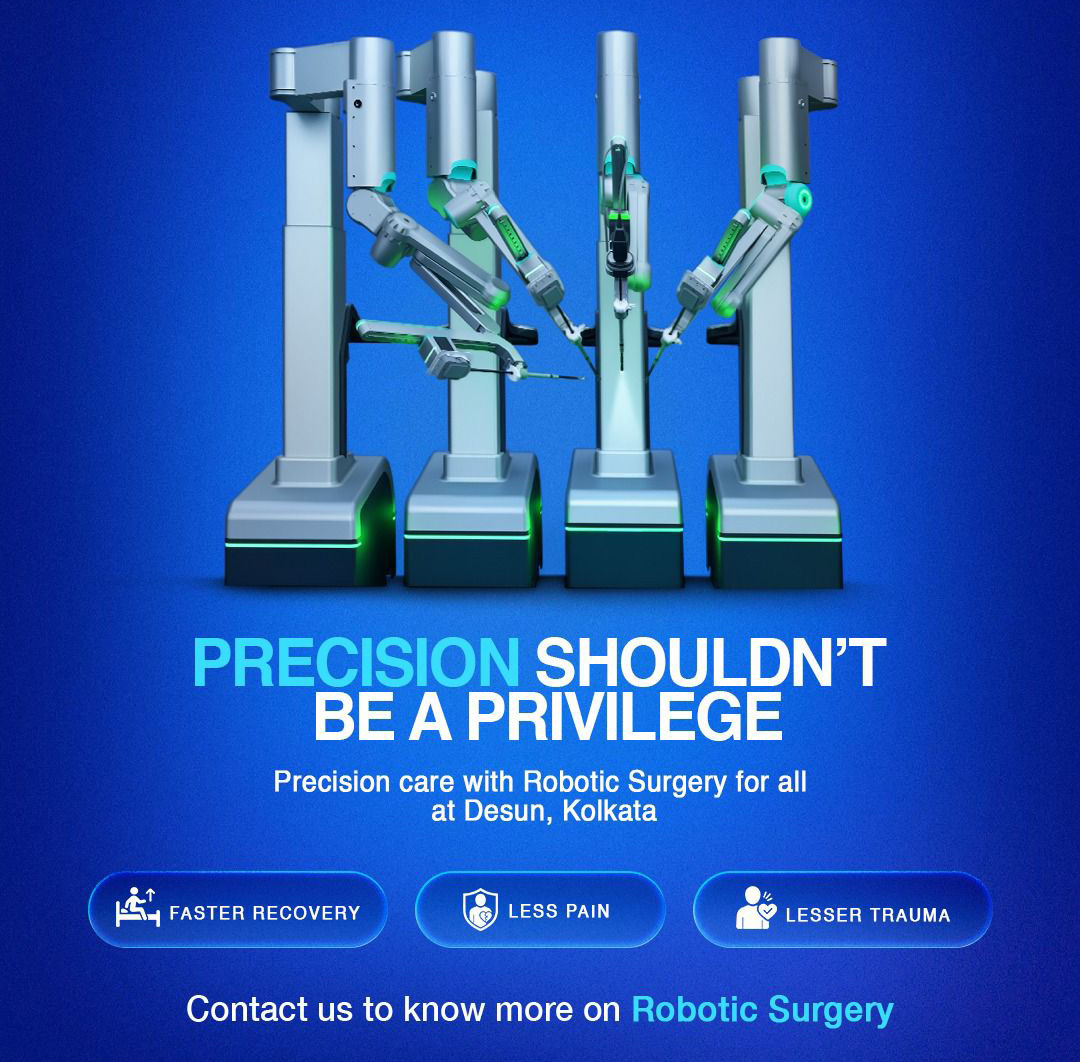
Robotic General & GI Surgery is a minimally invasive surgical approach where Surgeons use a computer-assisted robotic system to perform procedures involving the digestive system and abdominal organs. This includes surgeries of the:

Enhanced Precision
Robotic instruments provide superior dexterity and control, enabling highly accurate dissection and suturing.

Minimally Invasive
Small incisions reduce surgical trauma and improve cosmetic outcomes.

Less Pain & Discomfort
Reduced tissue damage leads to significantly lower post-operative pain.

Reduced Blood Loss
Minimizes the need for transfusions and lowers overall surgical risks.

Lower Risk of Infection
Smaller wounds reduce exposure and significantly lower infection chances.

Faster Recovery
Patients can return to normal activities much sooner compared to open surgery.

Shorter Hospital Stay
Early discharge makes treatment more convenient and cost-effective.
Robotic-assisted surgery is widely used for:
A comparison of advanced robotic-assisted procedures with traditional open surgery techniques.
| Features | Robotic Surgery | Open Surgery |
|---|---|---|
| Incisions | Small | Large |
| Pain | Less | More |
| Recovery | Faster | Slower |
| Blood Loss | Minimal | Higher |
| Scarring | Minimal | More visible |
Robotic surgery provides a patient-friendly alternative with improved clinical outcomes.
Robotic technology is particularly valuable in urology due to the precision required in preserving vital structures. It offers:


No. The surgeon performs the procedure using a robotic system for enhanced precision and control.
Yes. It is clinically proven and widely used in leading hospitals worldwide.
No. It involves small incisions, resulting in minimal scarring and quicker healing.
With advancements such as indigenous robotic systems, it is becoming more accessible and cost-effective.
Not necessarily. Improved precision often enhances surgical efficiency.
Patients can expect:



 90 5171 5171