Faster recovery, tiny scars: Why Robotic Hernia and Lobectomy surgeries are changing lives
October 27, 2026
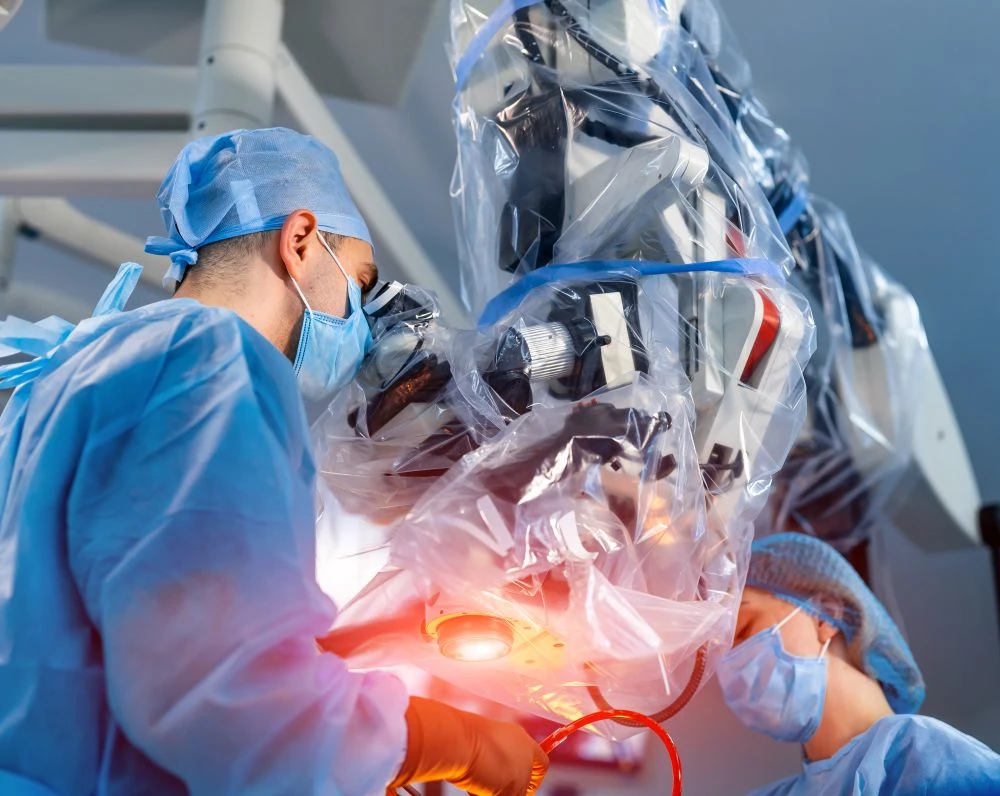 Robotic hernia repair and robotic lobectomy surgeries
are helping patients with faster recovery and small cuts (incision) compared to larger incision in non-robotic surgeries. The precision, small incision is helping in fester recovery and early discharge of patients.
Common questions with general answers on how these advanced procedures help patients:
Robotic Hernia Surgery
- Q: How does robotic surgery change the way hernias are treated?
- A: The surgeons perform the surgery through a small incision to control the robotic arm, placing mesh to repair the hernia through few minor cuts.
- Q: What are the main benefits for the patient?
- A: There are much less post-operative pain and lower chances of post-operation infections in robotic surgeries. There are faster recovery and early discharge. Patients get back to normal life sooner.
- Q: How small are the scars?
- A: The scars are small – in most cases just 3 to 4 tiny marks measuring 8mm to 12mm
Robotic Lobectomy (Lung Surgery)
- Q: What is a robotic lobectomy?
- A: This is the surgical procedure to remove the diseased part of the lung (often done in case of lung cancer) performed using robotic surgery.
- Q: How does this compare to traditional open-chest surgery (thoracotomy)?
- A: Traditional surgery requires cutting and spreading the ribs open through a large incision. The robotic arms precisely move between the ribs without spreading them, drastically reducing the trauma on the chest wall.
- Q: How robotic lobectomy does speed up recovery?
- A: Since the chest wall is not spread, lung function recovers much faster than open surgery. There is much less post-surgical pain, fewer post-operative respiratory complications. All these helps to speed up the recovery and helps in early discharge.
- Q: What do the scars look like?
- A: There are not long, painful scar across the side of the chest, patients have a few small incision scars.
The Indian Medical Scenario
- Q: Are these technologies widely available in India?
- A: Major tier-1 and tier-2 cities across India feature state-of-the-art hospitals equipped with advanced robotic systems.
- Q: Why are Indian patients increasingly choosing robotic surgery?
- A: While the initial cost may be higher, patients prioritize the shorter hospital stays, drastically reduced blood loss, and the ability to get back to work faster, which saves overall cost and complication in the long run.
Expert Opinion
“Robotic-assisted surgery is transforming the treatment of conditions such as hernia and certain lung diseases requiring lobectomy. With enhanced precision, improved visualisation and smaller incisions, robotic techniques may help reduce postoperative pain, minimise scarring and support faster recovery in appropriately selected patients. However, the suitability of robotic surgery depends on the patient’s condition, and the choice of surgical approach should always be guided by an expert’s clinical assessment.”
-Consultant Robotic Surgeon
-Desun Hospital, Kolkata
OPD Visits & Consultations
- Q: How can patients consult a robotic surgeon at Desun Hospital?
- Q: What happens during the initial robotic surgery OPD visit?
- A: Experienced general and GI robotic surgeons, Lung surgeons evaluate the patient’s diagnostic scans, determine eligibility for a robotic repair, and map out a tailored, minimally invasive treatment track.
Medical Insurance Coverage
- Q: Does health insurance cover robotic hernia and lobectomy surgeries?
- A: Most modern, comprehensive health insurance policies cover robotic-assisted procedures under minimally invasive and advanced medical treatments.
- Q: How does Desun Hospital assist with insurance and billing?
- A: Desun features a dedicated patient counselling and patient coordination team. They guide families through the approval paperwork, verify specific policy limits, and manage the cashless tPA approval process directly with insurance providers.
Advanced Robotic Surgery Facilities
- Q: What surgical technology powers these minimally invasive operations?
- A: Desun uses advanced 4th-generation robotic surgical systems featuring 3D, 4K magnified vision and precise process.
JCI, NABH, & Large Modern Hospital Features
- Q: What global quality benchmarks protect patients at Desun?
- A: Desun Hospital holds dual JCI (Joint Commission International) and NABH (National Accreditation Board for Hospitals) These accreditations guarantee strict alignment with elite international standards for patient safety, quality, sterile care protocols, and surgical excellence.
- Q: What large-scale medical infrastructure does the hospital offer?
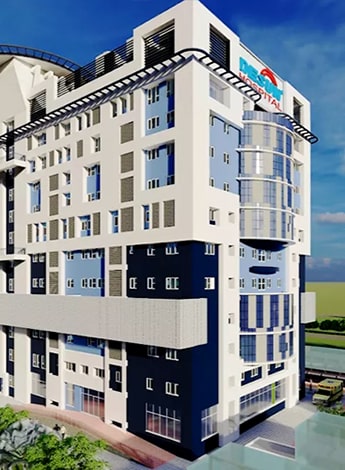
- A: Desun stands as a premier 750-bed superspeciality mega-hospital equipped with specialized modern features:
- Modern Steel OTs: Specially designed steel operating theatres that drastically eliminate the risk of Hospital Acquired Infections (HAIs).
- Massive Critical Care Wing: Includes over 250+ ICU beds staffed by 24/7 dedicated anaesthesia and intensive care support teams.
- Ambulance, Rooftop Helipad & 24/7 Emergency: Features a dedicated rooftop helipad to accept rapid air ambulance transfers for complex and emergency surgical admissions across Eastern India. Red Ambulance and Ambulance network that connects whole of West Bengal.
 90 5171 5171