Skip to content
NABH Certified JCI Accredited
24×7 helpline90 5171 5171
Treatment · Gastroenterology

Capsule Endoscopy

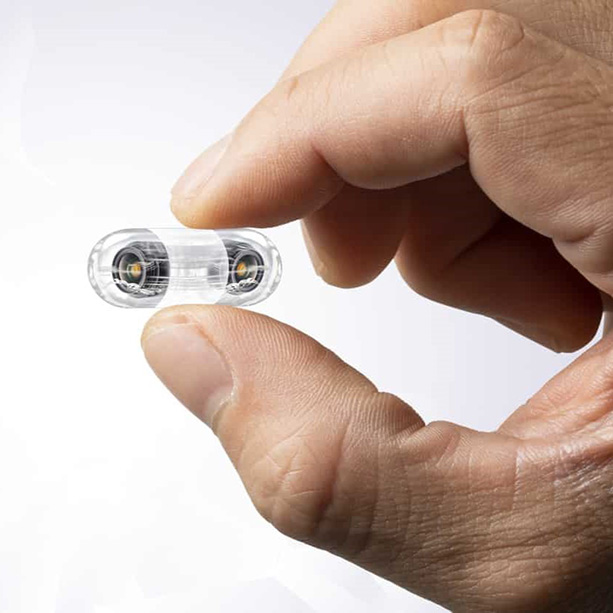
Capsule endoscopy is a non-invasive diagnostic procedure that involves swallowing a small, pill-sized camera to capture images of the digestive tract, especially the small intestine.

About the Treatment

Capsule endoscopy is a non-invasive diagnostic procedure that involves swallowing a small, pill-sized camera to capture images of the digestive tract, especially the small intestine. This procedure is used to examine areas of the digestive system that are difficult to reach with traditional endoscopic methods. It provides a detailed view of the gastrointestinal (GI) tract, aiding in the diagnosis of various conditions, including unexplained GI bleeding, Crohn’s disease, celiac disease, and tumors.
Capsule endoscopy helps doctors see inside the patient’s small intestine — an area that isn’t easily reached with more-traditional endoscopy procedures. Traditional endoscopy involves passing a long, flexible tube equipped with a video camera down the patient’s throat or through the patient’s rectum. Capsule endoscopy is also known as Capsule enteroscopy or Wireless capsule endoscopy. Capsule endoscopy allows for examination of the small intestine, which cannot be easily accessed by traditional methods of endoscopy.
At Desun Hospital, we offer advanced capsule endoscopy services, providing high-precision imaging and expert gastroenterologists for accurate diagnosis and effective treatment. With state-of-the-art technology and patient-centric care, we ensure a seamless and comfortable experience, helping detect and manage complex gastrointestinal conditions with precision.

Know More About Capsule Endoscopy

How Does Capsule Endoscopy Work?

The procedure involves swallowing a capsule-sized camera (approximately the size of a large vitamin pill) that contains:

  • ✔ A tiny camera that captures thousands of images.
  • ✔ A light source for illumination.
  • ✔ A transmitter to send data wirelessly.
  • ✔ A battery with a lifespan of 8–12 hours.
  • Once swallowed, the capsule travels through the digestive system naturally, taking continuous images of the esophagus, stomach, and small intestine. These images are transmitted to a wearable recorder, which is later analyzed by a doctor. The capsule is naturally excreted through bowel movements within 24–48 hours.

Why Is Capsule Endoscopy Used?

Capsule endoscopy is primarily used to examine the small intestine, a region that is difficult to reach using traditional endoscopic methods. It helps in diagnosing:

  • ✔ Unexplained Gastrointestinal Bleeding (GIB): Identifies the source of internal bleeding when traditional methods fail.
  • ✔ Crohn’s Disease: Helps assess small bowel damage due to gluten intolerance.
  • ✔ Small Intestinal Tumors & Polyps: Identifies growths that could be benign or cancerous.
  • ✔ Iron Deficiency Anemia (IDA): Helps detect causes of chronic blood loss.
  • ✔ Unexplained Abdominal Pain & Diarrhea: Assesses conditions like obscure malabsorption disorders.

Advantages of Capsule Endoscopy

  • Minimally Invasive & Painless: Minimally Invasive & Painless: No tubes or sedation required.
  • Comprehensive Small Intestine Imaging: Reaches areas that traditional endoscopy cannot.
  • High Diagnostic Accuracy: Captures thousands of detailed images for precise diagnosis.
  • No Hospitalization Needed: The procedure is performed on an outpatient basis.
  • Lower Risk of Complications: Unlike traditional endoscopy, there is no risk of airway blockage or sedation-related issues.

Limitations & Risks of Capsule Endoscopy

  • Limited Control Over Capsule Movement: The capsule moves passively, and images depend on natural peristalsis.
  • Does Not Allow Biopsy or Treatment: Unlike traditional endoscopy, capsule endoscopy is only diagnostic and does not allow tissue sampling or polyp removal.
  • Risk of Capsule Retention: In rare cases, the capsule may get stuck in the digestive tract, especially in patients with intestinal strictures, obstructions, or narrowing.
  • Image Quality Issues: Some images may be blurry due to food residues, rapid movement, or incomplete visibility.

Procedure: What to Expect?

Before the Procedure (Preparation)


  • Fasting Required: Patients must fast for at least 8-12 hours before swallowing the capsule to ensure a clear view of the digestive tract.
  • Avoid Certain Medications: Doctors may advise pausing medications like iron supplements or laxatives that can interfere with imaging.
  • Bowel Cleansing (Optional): In some cases, a mild laxative is prescribed to enhance visualization.
  • Wearing a Recorder: A small data recorder is strapped around the waist to collect image transmissions.

During the Procedure


  • The patient swallows the capsule with water, and it starts transmitting images immediately. Normal daily activities can be resumed, but strenuous exercise and lying down should be avoided for the first few hours.
  • The capsule naturally travels through the GI tract without discomfort.

After the Procedure


  • Patients can resume eating after a few hours
  • The recorder is returned to the doctor for data retrieval
  • The capsule is naturally excreted in stool within 1–2 days (patients do not need to retrieve it)
  • The doctor analyzes the recorded images and provides a diagnosis

Who Should Avoid Capsule Endoscopy?

  • Patients with bowel obstructions, strictures, or narrowing (risk of capsule retention)
  • Individuals with swallowing difficulties
  • Patients with implantable medical devices (e.g., pacemakers or defibrillators) (risk of signal interference)
  • Pregnant women (only if necessary)

Your Treatment Journey

What to Expect — Step by Step

From the first consultation to your follow-up, with typical durations for Capsule Endoscopy.

Day-care to 2 Daysin hospital
2–7 Daysback to daily life
1 Visitfollow-up
  1. Consultation with the Gastroenterology Specialist

    Examination, review of your reports and a decision on the procedure and date.

    Day 1 · OPD
  2. Pre-surgery Tests

    Blood tests, ECG, chest X-ray and an anaesthesia check — same day or the next.

    Day 1–2
  3. Admission

    Usually the evening before surgery. Bring your reports, photo ID and the medicines you take.

    Day before
  4. Surgery / Procedure

    Endoscopic procedures through the mouth or colon under sedation; 20–60 minutes.

    Procedure day
  5. Recovery in Hospital

    Rest for a few hours; soft food for a day.

    Day-care to 2 days
  6. Discharge & Home Care

    Discharge summary, medicines, diet and activity advice; wound care explained.

    Going home
  7. Follow-up — In Person or Video

    Review of healing and reports. International patients can follow up by video after flying home.

    1 visit
What to bring
  • Previous endoscopy / scan reports
  • Fasting as instructed (usually 6–8 hours)
  • Someone to accompany you home
  • Photo ID (passport for international patients)
  • Insurance / TPA card if any

Typical journey — your surgeon will confirm the plan for you. International patient? Send your reports for a free opinion first.

FAQs

Frequently Asked Questions

Still Have a Question?Talk to our patient care team — we’re available 24 × 7.+91 90 5171 5171
Why is capsule endoscopy needed?

It helps diagnose conditions affecting the small intestine, including:

  • Unexplained gastrointestinal bleeding
  • Crohn’s disease
  • Small bowel tumors or polyps
  • Celiac disease
  • Unexplained chronic diarrhea or abdominal pain
  • Is the procedure painful?

    No, capsule endoscopy is completely painless. The capsule is small and easy to swallow, and there is no need for sedation.

    How long does the capsule stay in the body?

    The capsule typically passes through the digestive system within 24–48 hours and is naturally excreted in the stool.

    Can capsule endoscopy detect colon cancer?

    Capsule endoscopy is mainly used for the small intestine, but some advanced capsules can assess the colon. However, a traditional colonoscopy is preferred for detecting colon cancer.

    Can I resume normal activities after capsule endoscopy?

    Yes, most daily activities can be resumed immediately, except for strenuous exercises and MRI scans until the capsule has passed.

    Your Details

    With — Capsule Endoscopy

    Fields marked * are required.

    Upload Prescription / Report
    By submitting you agree to be contacted by Desun Hospital.

    WhatsApp us