Understanding gallstones and it’s requirement for surgery
September 28, 2026

Gallstones are hardened deposits that develop inside the gallbladder. They are relatively common and may remain unnoticed for years. Some people have silent gallstones that cause no symptoms and require no immediate treatment.
Others develop recurrent pain or complications that may make treatment, and sometimes surgery, necessary. Understanding the difference is important because simply finding gallstones on an ultrasound does not automatically mean that the gallbladder needs to be removed.
What is the gallbladder?
The gallbladder is a small, pear-shaped organ located beneath the liver. It stores bile, a digestive fluid produced by the liver, and releases it into the small intestine when needed. Gallstones can develop when substances in bile, particularly cholesterol or bilirubin, become imbalanced and form solid particles.
What causes gallstones?
There are two major types of gall stones:
- Cholesterol stones, which are the most common type
- Pigment stones, which are associated with excess bilirubin in bile
While having one or more risk factors does not mean that a person will definitely develop gallstones, primary factors that may increase the risk of gall stones, include:
- Being overweight or having obesity
- Rapid weight loss
- Pregnancy
- Increasing age
- Certain metabolic conditions
- Family history
- Some diseases affecting the liver or blood
- Certain medications
What are the symptoms?
Many people have gallstones without symptoms. When stones cause problems, the most common symptom is biliary colic, a sudden or persistent pain in the upper right or upper middle part of the abdomen. While other symptoms may occur when complications develop, usually the pain may:
- Occur after a meal, particularly a heavy or fatty meal
- Spread towards the back or right shoulder
- Last from several minutes to a few hours
- Be accompanied by nausea or vomiting
When can gallstones become dangerous?
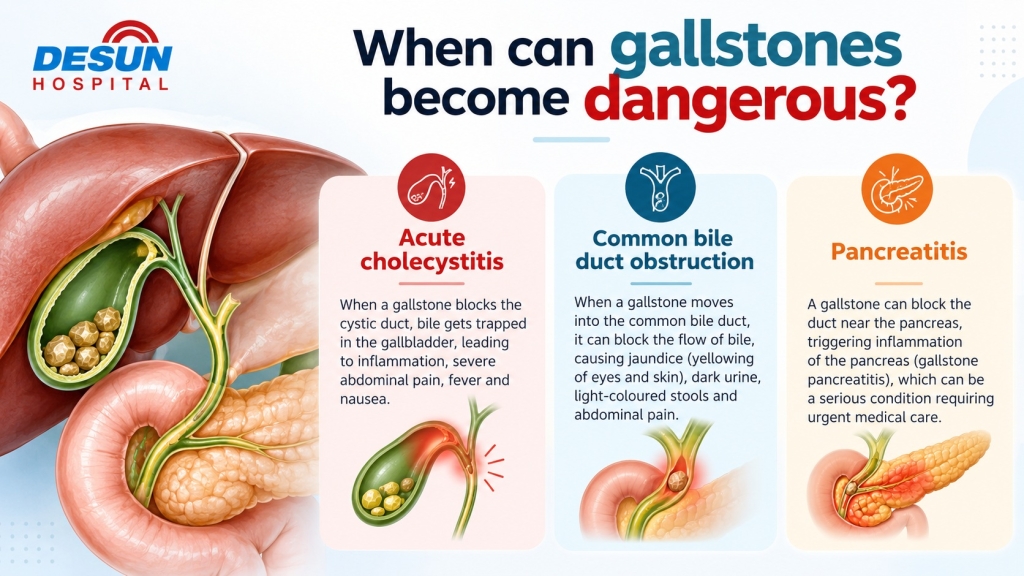
Gallstones can sometimes block the normal flow of bile. Possible complications include:
Acute cholecystitis: A stone can block the gallbladder outlet, causing inflammation and infection. Pain may become severe and persistent, and fever may develop.
Common bile duct obstruction: A stone can move into the common bile duct and obstruct bile flow. This may cause jaundice, dark urine and pale stools.
Pancreatitis: A stone obstructing the shared drainage pathway can sometimes trigger inflammation of the pancreas, which can be serious.
When do gallstones require surgery?
Not every person with gallstones needs surgery. If gallstones are discovered incidentally and are not causing symptoms or complications, doctors may recommend observation rather than immediate surgery in many cases.
Surgery is commonly considered when gallstones cause recurrent symptoms or complications. The decision for surgery depends on the patient’s symptoms, investigations, overall health and the clinical assessment of the treating surgeon.
Indications may include:
- Repeated attacks of gallbladder pain
- Acute or chronic cholecystitis
- Gallstone-related pancreatitis
- Stones in the common bile duct
- Certain gallbladder complications
- Selected patients with other specific risk factors
How are gallstones diagnosed?
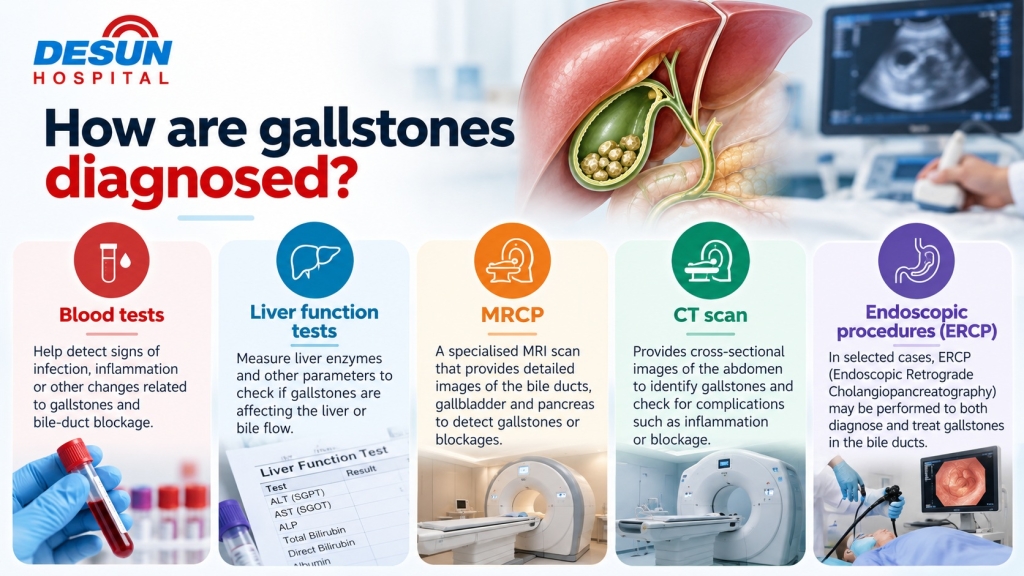
Ultrasound of the abdomen is commonly used to identify gallstones and assess the gallbladder, but the choice of investigation depends on the symptoms and suspected complication. Depending on the situation, doctors may also recommend:
- Blood tests
- Liver function tests
- MRCP
- CT scan
- Endoscopic procedures such as ERCP in selected cases
What is laparoscopic gallbladder surgery?
The standard surgical treatment for symptomatic gallstones is usually
laparoscopic cholecystectomy, in which the gallbladder is removed through small incisions, a procedure that is performed under general anaesthesia. In selected circumstances, open surgery may be necessary, particularly when complications or technical factors make laparoscopic surgery unsuitable.
Can you live normally without a gallbladder?
Yes. The liver continues to produce bile after the gallbladder is removed. Instead of being stored in the gallbladder, bile flows directly into the intestine. Most people are able to return to their normal activities after recovery.
When should you seek urgent medical attention?
The important point is that stones do not always mean surgery. An ultrasound report showing gallstones can understandably cause anxiety. But treatment should be based on the complete clinical picture, not the scan alone.
There are some symptoms, which can indicate complications requiring timely evaluation. Seek prompt medical care if you experience:
- Severe or persistent abdominal pain
- Fever with abdominal pain
- Yellowing of the eyes or skin
- Repeated vomiting
- Dark urine with abdominal symptoms
- Severe pain radiating to the back
Expert Opinion
“Gallstones may not always require surgery, especially when they cause no symptoms. However, recurrent pain, inflammation, infection or complications may make surgery necessary. If you experience repeated abdominal pain, particularly after meals, nausea or vomiting, it is important to consult a specialist. Timely evaluation can help determine whether surgery is required and prevent complications.”
-Consultant GI Surgeon
-Desun Hospital, Kolkata
If abdominal pain keeps returning, don’t simply attribute it to indigestion. A proper evaluation can identify the cause and help prevent complications.
At
Desun Hospital Kolkata, patients with suspected gallstones can undergo appropriate evaluation to determine whether observation, medical management or surgical treatment is appropriate.
 90 5171 5171