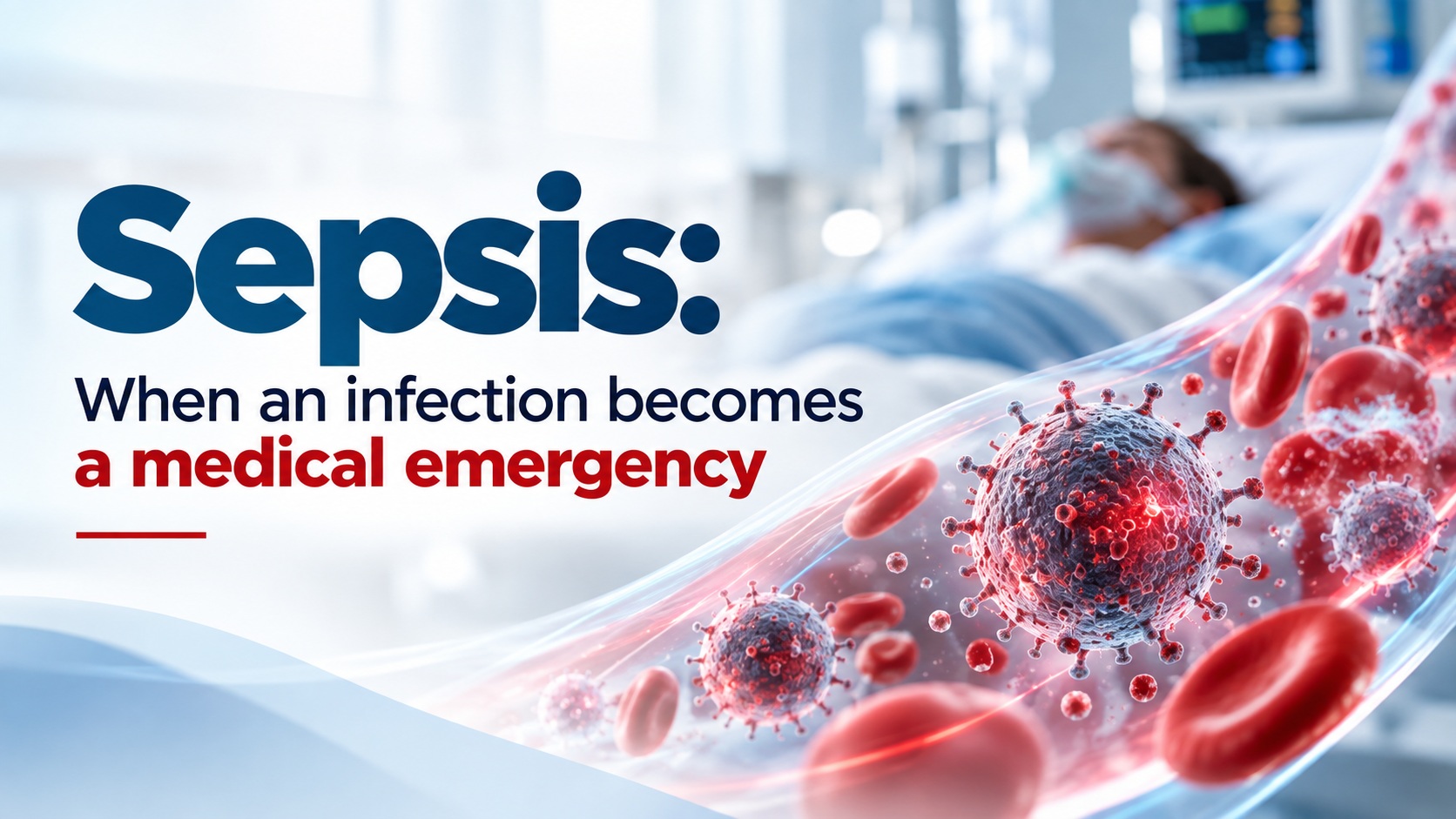
Sepsis: When an infection becomes a medical emergency
October 1, 2026
What Is Sepsis?
The immune system of the body overreacts to the infection in the body. This creates a situation that needs special medical care.
In usual case of infections, cuts, wounds the body’s immune system acts over the effected or small area. In sepsis, there is a panic and over reaction from the body that overwhelms the system with excess chemicals that damages the healthy organs, unusual reactions and even can cause dangerously low blood pressure.
Who Is Most at Risk?
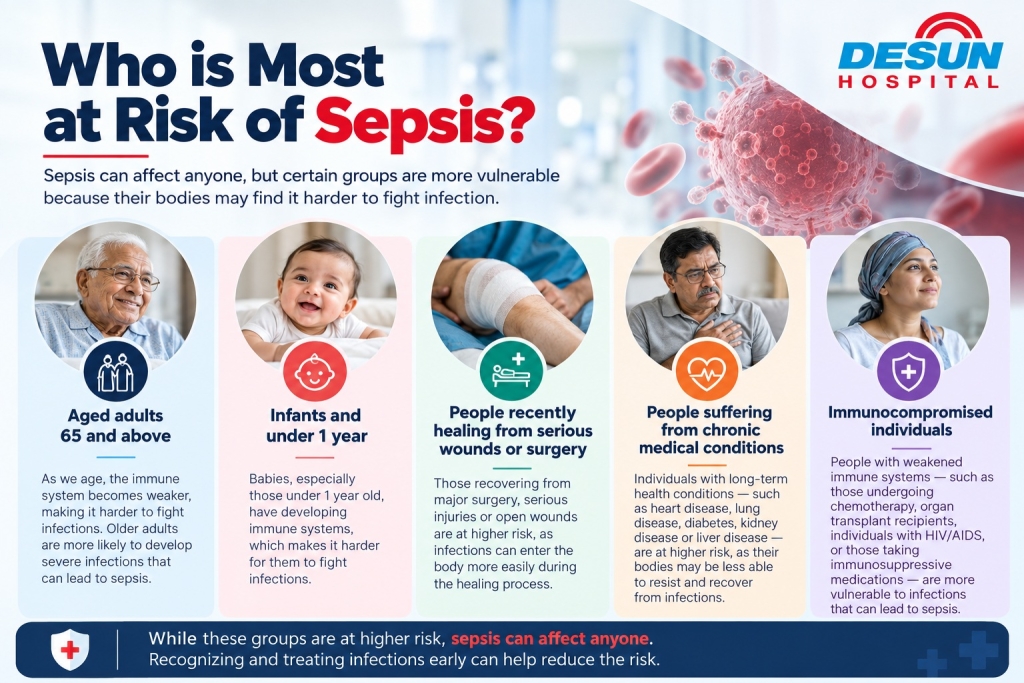
Anyone who is having an infection can get sepsis, but certain groups of people with some health conditions are more vulnerable due to weak immune system.
Aged adults 65 and above
Infants and under 1 year
People suffering from chronic medical conditions: Uncontrolled diabetes, COPD and other lung diseases, Kidney related problem, or cancer patients have higher risk levels.
Immunocompromised individuals: People with weak immune system, cancer patients undergoing chemotherapy or under immunosuppressants treatment.
People recently healing from serious wounds or surgery: Patients post-surgery recovery stage, undergone invasive procedures, or healing serious wounds.
How Sepsis Is Diagnosed and Treated
Sepsis requires emergency hospitalization - timely medical care at hospitals required to reduce risk.
Fast-Track Diagnosis
Medical teams move things fast so that with available information they can speed up treatment:
Blood tests
Cultures
Imaging
Aggressive Treatment
Post identification of the situation and other health parameters with all required reports the team of doctors start more targeted treatment to control the sepsis, infection and inflammation
Intravenous (IV) Antibiotics
IV Fluids
Vasopressors
Source of Infection Control
Long-Term Recovery vs. Prevention
In case there is sepsis, it takes some time to get complete recovery. It includes some days of hospital stay depending on health condition and post discharge care at home. It is best not to delay treatment and take appropriate treatment to avoid sepsis.
Post-Sepsis Syndrome (The Recovery)
Many sepsis survivors experience long-term physical and psychological impact on health and mind. It is called Post-Sepsis Syndrome. It may take months or even years to recover depending on health condition and other factors:
Physical impact: Muscle weakness, Frequent joint pain, unexplained fatigue, and repeated cycles of infections.
Mental health impact: Brain fog, Some memory loss, recurring anxiety, mood swings and depression, and Post-Traumatic Stress Disorder (PTSD).
Prevention (Preventing Sepsis or minimize chances)
Timely appropriate medical care can help reduce chances of getting sepsis to a great extent:
Vaccinations help: Keeping flu, COVID-19, pneumonia, and chickenpox vaccines updated as per date and schedules to reduce chances of infection.
Try healing wounds sooner: Do not ignore even minor wounds, keep an eye on sudden swelling, puss formation or wound expanding. Clean wound area and take medicines as per medical advice.
Well Manage Chronic and lifestyle diseases: Follow medical advice and stay aware about certain illnesses like diabetes or kidney disease etc.
Expert Opinion
“Sepsis is a life-threatening medical emergency that occurs when the body’s response to an infection causes organ dysfunction. Fever or low body temperature, rapid breathing, fast heart rate, confusion, extreme weakness and reduced urine output can be warning signs. Early recognition and timely treatment are crucial, as sepsis can worsen rapidly and affect vital organs. If a severe infection is accompanied by sudden deterioration or these warning signs, immediate medical attention is essential.”
-Consultant Critical Care Medicine
-Desun Hospital, Kolkata
Desun Hospital a JCI and NABH accredited large World Class Hospital in Kolkata
Sepsis Care at Desun Hospital
Desun Hospital in Kolkata is highly equipped to manage life-threatening conditions like sepsis through its robust 24-hour emergency and critical care infrastructure.
Because sepsis is a rapid, time-sensitive medical crisis, the hospital's specific emergency features are vital for patient survival:
24/7 Emergency Admissions: The hospital operates a round-the-clock emergency team explicitly trained to handle acute trauma and severe, hyper-accelerated infections.
Massive Critical Care Capacity: Desun maintains 94 dedicated critical care beds alongside a 750-bed total capacity, ensuring that sepsis patients who escalate into septic shock can immediately secure an ICU bed.
Rapid Diagnostics: The facility features high-end diagnostics, including advanced modular labs and swift imaging, which are essential for running the urgent blood cultures and organ-function panels needed to pinpoint sepsis.
Immediate Specialist Access: The hospital provides 24/7 on-call availability of senior specialists, including critical care experts, pulmonologists, and surgeons to handle immediate source control (like draining infectious abscesses).
If someone is displaying warning signs of sepsis-such as a spiking fever, extreme shivering, sudden confusion, or an alarming drop in blood pressure- emergency hospital admission in Desun Hospital is open 24-hour, 365 days, even on holidays and festive days. Call emergency helpline at +91 90517 15171.
 90 5171 5171
 Anyone who is having an infection can get sepsis, but certain groups of people with some health conditions are more vulnerable due to weak immune system.