Robotic Knee Replacement Surgery is Better Than Traditional Knee Replacement Surgery

July 24, 2026 Robotic Knee Replacement Surgery if compared with laparoscopic or traditional knee surgery there are certain advantages and challenges. These cannot be weighed in direct comparing of these techniques but varies case to case and patient to patient. None of these are obsolete but is decided as per overall situation that includes many factors. It is just not about premium and recent option but much more than cost.

The 3 Types of Surgeries

  1. Traditional Knee Replacement: The success standard for decades. Surgeons cut open the portion manually and align and fit the implant by viewing the location.
  2. Robotic-Assisted Knee Replacement: A surgeon controls the robotic arm utilizes the detailed 3D imaging to plan and execute sub-millimeter bone cuts and optimal ligament balancing.
  3. Minimally Invasive Knee Replacement: A minimally invasive diagnostic and repair technique. It uses a small camera (not 3D views like robotic) and instruments inserted through "keyhole" incisions to carry out the knee replacement surgery


    1. Patient Type & Health Condition

      1. Total/Robotic Replacement: It is mostly suggested to patients with severe osteoarthritis, rheumatoid arthritis, or chronic joint degeneration that limits daily movement. Some of these conditions are inflammatory and autoimmune.
      2. Minimally invasive: Best for younger people, little active patients with other health conditions more or less stable who require knee replacement.
      3. Health Conditions: Patients with complex anatomies, severe deformities, or those needing a highly customized implant fit are the best candidates for robotic precision.


      Advantages & Challenges

      Robotic Surgery:

      1. Advantages: Implant last longer in most cases, less trauma to surrounding healthy tissue, lower post-operative pain, and faster recovery, lower chances of post-surgery infections.
      2. Challenges: Higher costs, set up time is high that pushes the total time and makes robotic surgery more time consuming in the operating room, and availability is mostly restricted to large hospital in India. Many hospitals do not have the facility.


      Traditional Surgery:

      1. Advantages: Proven long-term track record, widely accessible across India, and a lower upfront cost.
      2. Challenges: Slightly higher margin for human variability in alignment compared to robots.


      Pre-Surgery Preparation & Recovery

      1. Preparation: Both requires some blood tests, X-rays or CT scans, and a physical examination. In case of robotic surgery, the doctor will usually get details view of the knee with pre-operative imaging beforehand.
      2. Recovery: With robotic and minimally invasive procedures, patients typically begin standing and walking with aid within 24 hours. One can expect a shorter hospital stay (2 to 3 days for replacements depending on other health conditions). Full recovery and resuming regular usual activities generally take 6 weeks to 3 months. Physiotherapy is needed in all cases which ever process is selected - robotic, minimally invasive or traditional knee replacement surgery. There are some movements, postures, activities that will remain limited or restricted post-surgery for life.


      Cost Difference in India

      In India, the cost can vary depending on the hospital, the city, and the brand of the implant used.
      1. Traditional TKR: Cost less than robotic or minimally invasive process.
      2. Robotic-Assisted TKR: Costs highest among the three processes.
      3. Knee Arthroscopy: Costs higher than traditional process and lower than robotic process.


      Private Health Insurance Coverage

      1. Coverage Status: Most standard private health insurance policies in India cover joint replacement and arthroscopic surgeries, provided they are deemed medically necessary.
      2. Robotic Exclusions: Some insurers may still consider robotic-assisted surgery "experimental" or a "modern treatment method" and may cap the reimbursement of the robotic surcharge. It is highly recommended to check with your Third-Party Administrator (TPA) or use resources like the Insurance Regulatory and Development Authority of India guidelines on modern treatments.


      Knee Replacement Surgery Facilities at Desun Hospital

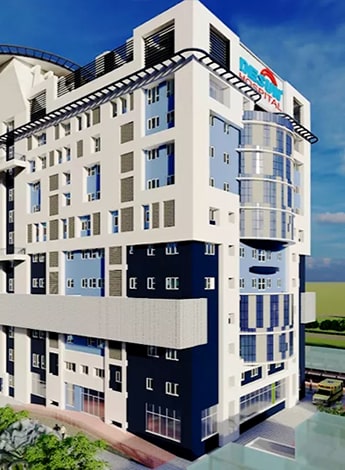
      Desun Hospital in Kolkata provides comprehensive choices for knee arthritis management, specialising prominently in traditional total knee replacement (TKR) and minimally invasive joint replacements. The hospital features advanced robotic surgery systems for various procedures. Contact Desun Hospital Patient care Team to Know more – Call: +91-9051715171

      Expert Opinion

      "Robotic-assisted knee replacement is not about replacing the surgeon—it's about empowering the surgeon with greater precision. The technology helps us customise the surgery according to each patient's anatomy, which can lead to better alignment, improved function, and potentially a smoother recovery. However, the best outcomes are achieved through the right patient selection, surgical expertise, and dedicated rehabilitation."
      -Consultant Orthopaedic Surgeon
      -Desun Hospital, Kolkata



      Surgery options at Desun Hospital

      Minimally invasive knee replacement
      1. Approach: The surgeon utilises specialized, downsized instruments to access the knee joint via smaller skin incisions (typically 3 to 4 inches instead of 8 to 10 inches).
      2. Advantage: This technique spares the quadriceps muscle group from extensive cutting, drastically reducing post-operative muscle trauma.
      3. Availability: It is widely performed by senior joint replacement teams at Desun Hospital, Kolkata.


      Traditional knee replacement
      1. Approach: This is the standard open method using visual alignment guides and manual instrumentation to resurface the worn-out joint.
      2. Advantage: It is highly dependable with extensive long-term success records. It also accommodates severely deformed or structurally compromised bones.
      3. Availability: Desun offers structured, all-inclusive packages for Traditional TKR Operations to ensure clear financial planning.


      Robotic surgery infrastructure
      1. Status: Desun Hospital features cutting-edge 4th-generation robotic surgical infrastructure with high-definition 3D visualization and EndoWrist articulation.
      2. Specialities: Currently, the hospital's robotic program heavily promotes urology, GI surgeries, and robotic CABG. For automated or robotic-assisted joint replacements specifically, patients are often guided to neighbouring super-speciality facilities along the E.M. Bypass corridor.


      Package and pricing structure

      Desun offers structured clinical pathways to simplify patient billing:
      1. Inclusions: Standard Knee Replacement Packages at Desun include up to 7-10 days of hospital stay, core surgical team fees, standard medications, and diagnostic panels.
      2. Exclusions: The physical cost of the knee implant (whether Indian or imported) is charged separately at actual value based on the patient's geometric needs.

      Desun Hospital Kolkata is JCI and NABH accredited superspeciality hospital with modern medical infrastructure. There is Knee and Joint speciality OPD where with prior appointment patients can consult experienced specialist doctors (orthopedics, rheumatologists, pain and physical medicine doctors)

image