PCOS vs Menopause: Similar Symptoms but Different Causes
July 7, 2026
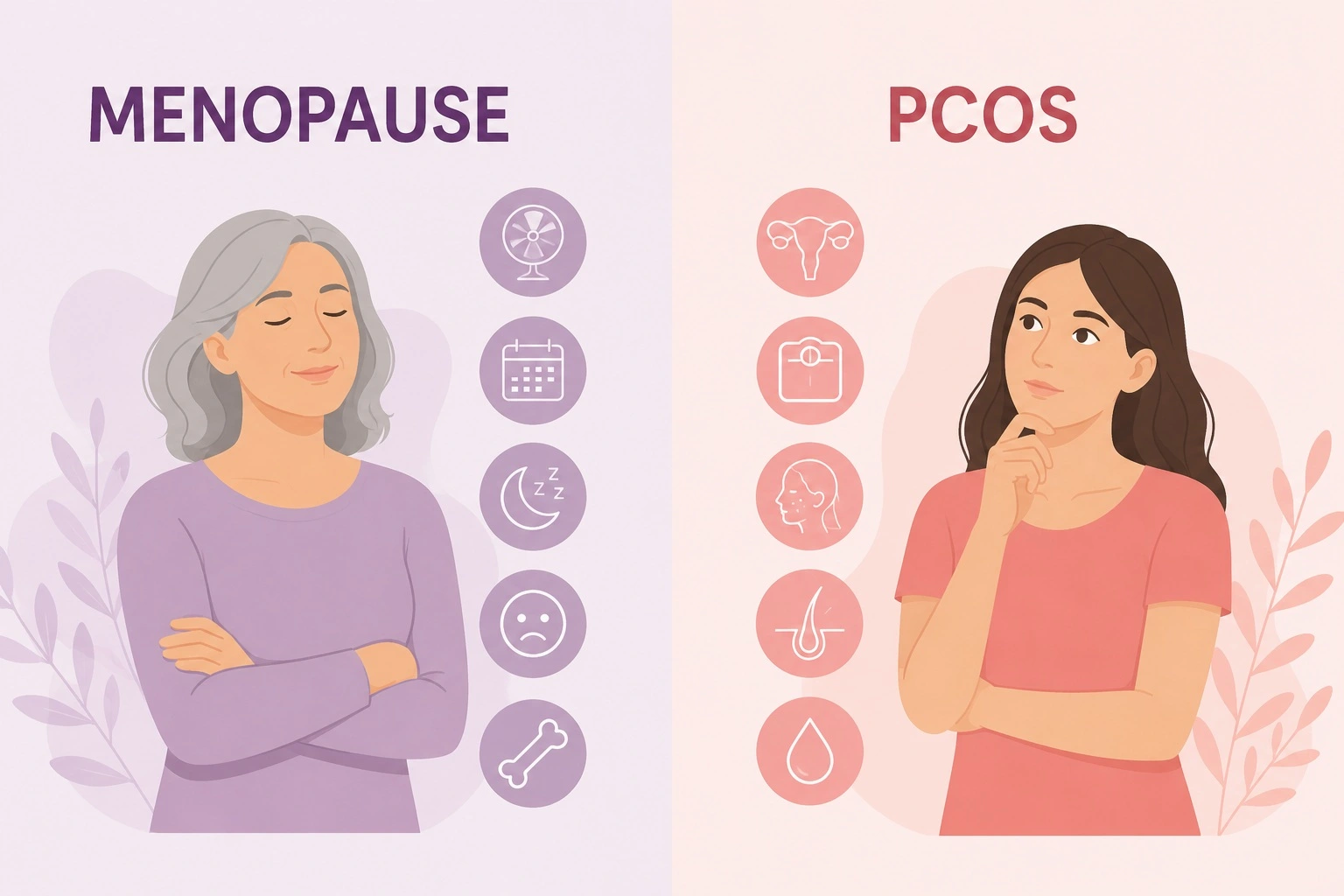
Many women wonder are their
symptoms due to PCOS or menopause? Many stays confused till they take medical advice from specialist doctor. The confusion is, both conditions share overlapping signs like irregular periods, weight gain, mood swings, and hair loss. But the root causes are very different and only specialist doctor can diagnose it and deliver appropriate treatment.
- PCOS (Polycystic Ovary Syndrome): Driven by high androgen (male hormone) levels.
- Menopause: Caused by a sharp drop in oestrogen.
Symptoms That Overlap
Both PCOS and menopause can cause:
- Not regular as per date range or completely missing periods among months cycle
- Weight gain (especially around belly and waist)
- Mood changes (anxiety, depression, irritability)
- Sleep problems (insomnia, disturbed sleep)
- Hair thinning on the scalp
The Differing Symptoms
- Menopause only: Hot flashes, night sweats, vaginal dryness, Dull skin, appearing of wrinkles, dryness of skin, dryness of skin around breast and nipples in some cases
- PCOS only: Facial hair growth, body hair, stubborn acne
Combined Impact:
Some women with
PCOS also said that their cycles become more regular as they approach menopause because androgen levels naturally decline.
PCOS Across Life Stages
| Life Stage |
Common PCOS Symptoms |
| Teens |
Acne prone skin, irregular periods, excess hair growth on face and body, dark skin patches (insulin resistance) |
| 20s-30s |
Fertility problem, sudden and unexplained weight gain, thinning of hair on scalp, enlarged ovaries, mood swings |
| 40s-50s+ |
Periods may normalize, but metabolic risks increase (diabetes, cholesterol, blood pressure) |
PCOS Types (Phenotypes)
Doctors classify PCOS into 4 types:
| Type |
Name |
Key Features |
| A |
Classic PCOS |
High androgens + Irregular periods + Polycystic ovaries |
| B |
Hyperandrogenic Anovulatory |
High androgens + Irregular periods (normal ultrasound) |
| C |
Ovulatory PCOS |
High androgens + Polycystic ovaries (regular periods) |
| D |
Non-Hyperandrogenic |
Irregular periods + Polycystic ovaries (normal androgen levels) |
Note: Types A & B carry the highest risk for
diabetes and heart disease.
Treatment Options During Menopause
Managing PCOS during menopause means tackling both
menopausal symptoms and
lifelong PCOS risks.
| Symptom / Target |
Medical Treatment |
Lifestyle Support |
| Hot flashes & night sweats |
Hormone Replacement Therapy (HRT) |
Cool room, layered clothing |
| Insulin resistance & weight gain |
Medical management as suggested by doctor |
Strength training, workout, healthy diet |
| Facial hair & hair loss |
Medical management as suggested by doctor |
hair removal and hair care |
| Vaginal dryness |
Vaginal oestrogen cream |
Water-based lubricants |
Why This Matters
Women with PCOS do not get rid of PCOS after menopause. Rather, the focus shifts from fertility to long-term health management.
- Higher risk of type 2 diabetes
- Increased chance of heart disease
- Need for regular post-menopausal checkups
Expert Opinion
"Many women assume that once they reach menopause, PCOS is no longer a concern. However, that's a common misconception. While reproductive symptoms may change, the metabolic effects of PCOS—such as insulin resistance, diabetes, high cholesterol, and cardiovascular risks—can continue well beyond the reproductive years. On the other hand, menopause is a natural biological transition that every woman experiences due to declining ovarian function. Since the symptoms of PCOS and menopause often overlap, a proper medical evaluation is essential to identify the underlying cause and recommend the most appropriate treatment. Early diagnosis, healthy lifestyle choices, and regular follow-up can significantly improve a woman's long-term health and quality of life."- Consultant Gynaecologist and Subfertility Expert, Desun Hospital
Takeaway
Some symptoms of PCOS and menopause may look alike, but they are driven by different hormones. Understanding the difference helps women get the right
gynaecology treatment and protect their long-term health.
 90 5171 5171