October 9, 2026Lung and breathing related health problems see a sharp rise in winter season. It is due to cold and dry air, smog and air-pollution and there is also easier viral transmission.
Asthma
Why it spikes: Cold, dry air results in sudden airway blockages (bronchospasm), while smog in winter and indoor dust/allergens irritate the already sensitive bronchial tubes.
Key Symptoms:
Frequent wheezing, tightness around chest, and short breathing.
Increased dependency on emergency inhalers.
It worsens during early morning walks or late evenings during high-pollution days.
COPD (Chronic Obstructive Pulmonary Disease)
Why it spikes: Winter is the most concerning season for COPD patients; cold air causes airways to narrow and get thicker due to inflammation, there is sticky mucus builds up, this makes breathing difficult.
Key Symptoms:
Sudden increase (exacerbations) with serious breathlessness and fatigue.
Delay in healing, thick cough producing excess phlegm.
Higher chances of serious secondary infections.
Cough and Common Cold
Why it spikes: Rhinovirus and other cold viruses suddenly increase with colder temperatures, and dry cold air impacts the protective fluid layer from the nasal passages and throat.
Key Symptoms:
Sneezing, running nose or blocked nose, and scratchy/sore throat.
A dry or productive cough that is not healing and lingers.
Increased congestion in upper-airway.
Cold Allergies & Allergic Bronchitis
Why it spikes: Cold dry air, heated rooms indoor and cold outside, the damp and residual moisture of monsoon, dust, mold spores, and high particulate pollution trigger hyper-reactive nasal and bronchial reactions.
Key Symptoms:
High frequency of sneezing and clear discharge from nose upon stepping into cold air.
A mild irritation in nose and throat, coughing accompanied by mild wheezing.
Headache and eye pain at times.
Pneumonia and Acute Bronchitis
Why it spikes: Dropping winter temperatures impact the immune responses in the lungs, increasing the risk of viral (Influenza, RSV) and bacterial pathogens to settle deeply into the air sacs.
Key Symptoms:
Acute bronchitis brings deep chest discomfort, thick mucus, and low-grade fever.
Pneumonia causes can have high temperature, shaking and chills, sharp chest pain on breathing, and severe fatigue.
High-risk groups include young children, older adults (60+), and diabetics.
General Prevention & Protection Tips
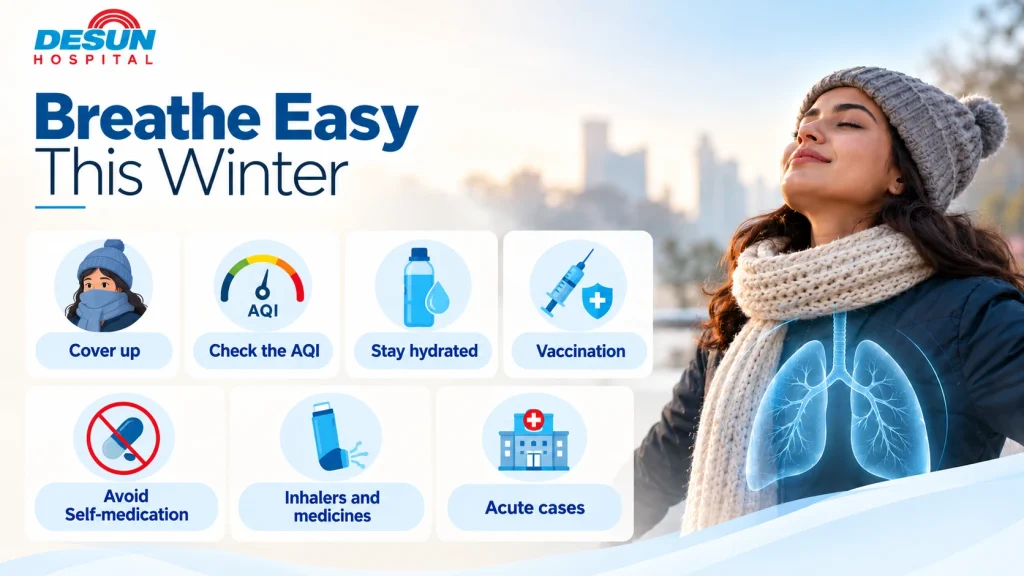
Cover up: Wear a scarf or mask over the nose and mouth when stepping out into cold air to adjust to the air.
Check the AQI: Avoid tiring outdoor exercise during peak pollution and early morning hours or late evenings.
Stay hydrated: Drink adequate quantity of warm water or fluids to keep airway mucus thin.
Vaccination: Consult a doctor and as per advice take the annual Influenza and Pneumococcal vaccines.
Avoid Self-medication: Do not self-medicate and if there are symptoms that are aggressively increasing or not healing and getting worse do consult with specialist doctor as soon as possible
Inhalers and medicines: Keep stock of inhalers and routine medicines for astha, copd as per doctor prescription and be regular,
Accute cases: In case of the need for emergency hospitalization immediately reach the nearest hospital with 24 hours emergency hospital admission facility and adequate modern lungs and cardiac facilities available even at midnight.
Expert Opinion
“Winter can increase the risk of respiratory infections and worsen existing lung conditions such as asthma and COPD. Cold air, seasonal viruses and exposure to air pollution can trigger coughing, wheezing, breathlessness and chest discomfort, particularly in vulnerable individuals. To protect your lungs, keep yourself warm, maintain good hand hygiene, stay up to date with recommended vaccinations and avoid smoking and exposure to polluted air. People with existing respiratory conditions should continue their prescribed medication and follow their doctor’s advice. Seek prompt medical attention if you experience severe breathlessness, chest pain or rapidly worsening symptoms.”
-Consultant Pulmonologist
-Desun Hospital, Kolkata
Desun Hospital provides a comprehensive, 24/7 advanced Pulmonology and Respiratory Medicine Outpatient Department (OPD) facility specifically equipped to handle critical and chronic lung conditions like COPD, asthma, bronchitis, and severe lung infections.
Core Treatment & Diagnostic Facilities
Advanced Diagnostics: Dedicated infrastructure for Pulmonary Function Tests (PFT), Spirometry, and diagnostic/therapeutic Bronchoscopy.
Critical Care Integration: Directly backed by a high-end ICU setup and emergency ventilators for patients experiencing sudden, severe winter aggravations or breathing failures.
All-Under-One-Roof: Consultation, advanced radiology (X-rays, CT Scans), pathology reporting, and pharmacy access are integrated for faster delivery of services.
OPD Schedule & Key Specialists
Daily OPD Hours: Pulmonology and cardiologists’ doctors available for consultation daily, typically from 10:00 AM to 4:00 PM by appointment. Call: 9051715171.
Appointments: It is best to reach the hospital post be pre-booking doctor appointment by dialing +91 90517 15171
Emergency Hospital Admission: Desun Hospital has 24 hours emergency medical admission facility even at midnight with arrangement for fast treatment within a modern and big medical infrastructure.
Stay healthy and take care of your lungs during winters.
 90 5171 5171