September 2, 2026When people hear the words “lung cancer”, smoking is often the first risk factor that comes to mind. While smoking remains the leading cause of lung cancer, it is important to understand that lung cancer can also develop in people who have never smoked.
Non-smokers can develop lung cancer because of exposure to second-hand smoke, air pollution, workplace hazards, radiation, genetic changes and other factors. In some patients, no obvious cause can be identified. This makes awareness particularly important. A person who has never smoked should not automatically assume that persistent respiratory symptoms are harmless.
Can non-smokers really develop lung cancer?
Yes. Lung cancer in people who have never smoked is a recognised medical condition. In fact, lung cancer among never-smokers can have different biological characteristics from smoking-related lung cancer. Certain genetic changes in lung cancer cells may be particularly relevant in non-smokers. Identifying these changes can sometimes help doctors select targeted treatments.
Importantly, not every person with a persistent cough has lung cancer, and most respiratory symptoms have other causes. However, symptoms that persist, worsen or occur alongside other warning signs deserve medical evaluation.
What can cause lung cancer in non-smokers?
Several factors may increase the risk. Primaries are:
Second-hand smoke: Regular exposure to tobacco smoke from other people can expose non-smokers to carcinogenic substances. Long-term exposure at home, in workplaces or other environments can increase risk.
Air pollution: Long-term exposure to polluted air has been associated with an increased risk of lung cancer. Fine particulate matter and other pollutants can enter deep into the lungs and contribute to chronic inflammation and cellular damage. This is particularly relevant in densely populated cities and areas with significant traffic or industrial pollution.
Occupational exposure: Certain workplaces may expose people to substances associated with lung cancer, including asbestos, silica, diesel exhaust and some industrial chemicals. People working in construction, manufacturing, mining and certain industrial environments may therefore require appropriate occupational safety measures.
Radon exposure: Radon is a naturally occurring radioactive gas that can accumulate indoors under certain conditions. Prolonged exposure to high levels can increase lung cancer risk.
Family history and genetic factors: A family history of lung cancer may be associated with increased risk. Some lung cancers also contain specific genetic mutations that can occur independently of smoking.
What are the symptoms?
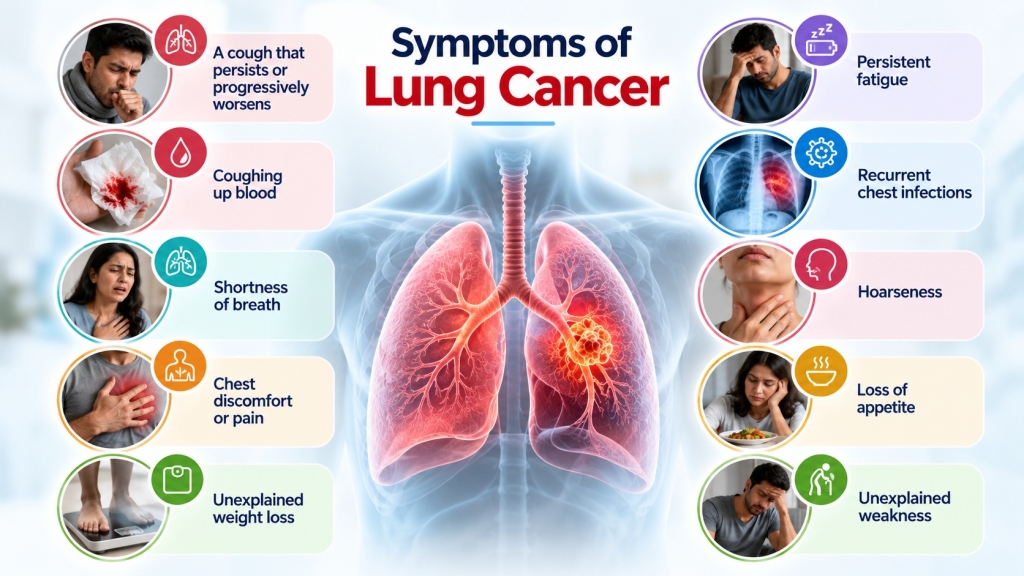
Lung cancer may not cause noticeable symptoms in its early stages. When symptoms develop, they can include:
A cough that persists or progressively worsens
Coughing up blood
Shortness of breath
Chest discomfort or pain
Unexplained weight loss
Persistent fatigue
Recurrent chest infections
Hoarseness
Loss of appetite
Unexplained weakness
While many of these symptoms can also occur with infections, asthma, tuberculosis, chronic respiratory disease and several other conditions, The key concern is persistence or unexplained progression.
Why can diagnosis sometimes be delayed?
One reason is the misconception that lung cancer is primarily a smoker's disease. A non-smoker with a persistent cough may initially attribute it to pollution, allergies or an infection. Another challenge is that early lung cancer may produce few or no symptoms. Therefore, unexplained or persistent respiratory symptoms should not be ignored simply because a person has never smoked.
How is lung cancer diagnosed?
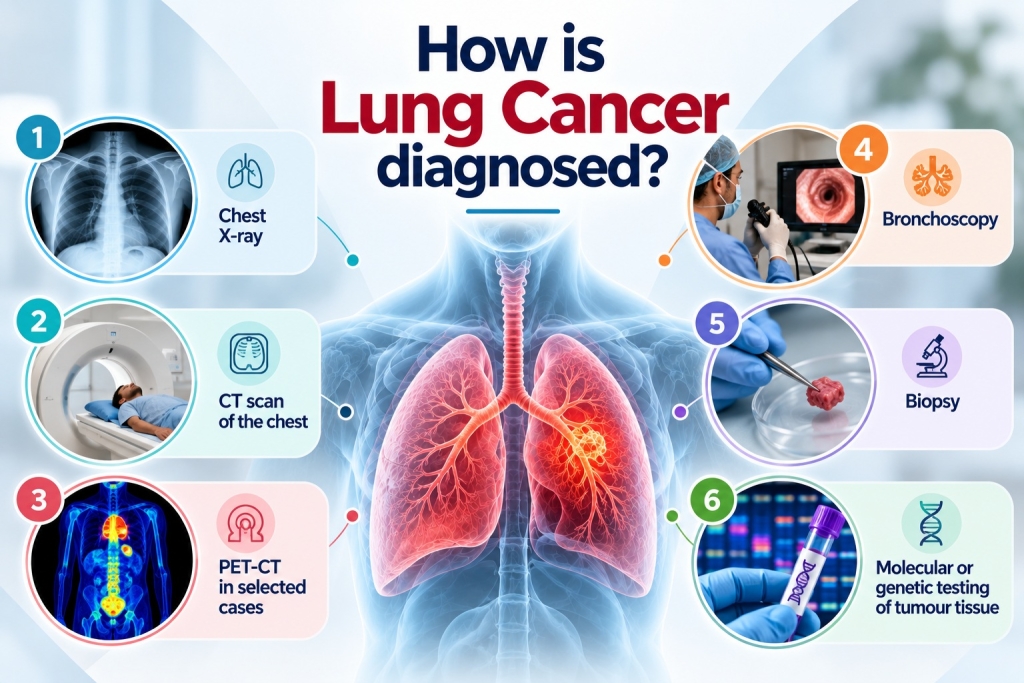
A doctor may begin with a detailed medical history and physical examination. A biopsy is generally required to confirm cancer and determine its type. Molecular testing may be recommended in certain lung cancers to identify genetic alterations that can influence treatment decisions. Depending on the symptoms and clinical findings, investigations may include:
Chest X-ray
CT scan of the chest
PET-CT in selected cases
Bronchoscopy
Biopsy
Molecular or genetic testing of tumour tissue
Can lung cancer in non-smokers be prevented?
There is currently no universal lung cancer screening recommendation for non-smokers. Screening decisions depend on individual risk factors and should be discussed with a healthcare professional. While it cannot prevent in every case, several measures can reduce risk:
Avoid tobacco smoke and second-hand smoke
Minimise exposure to workplace carcinogens
Follow appropriate occupational safety measures
Improve indoor ventilation where necessary
Reduce exposure to significant air pollution when practical
Maintain overall physical health
Expert Opinion
“Lung cancer can occur even in people who have never smoked. Exposure to second hand smoke, air pollution, radon and certain workplace chemicals can contribute to the risk, although in many non-smokers the exact cause remains unknown. Persistent cough, unexplained breathlessness, chest pain or unexplained weight loss should not be ignored. Early evaluation and appropriate investigations can help detect lung cancer at a stage when treatment options may be more effective.”
-Consultant Medical Oncologist
-Desun Hospital, Kolkata
When should you see a doctor?
Consult a doctor if you have a cough that does not resolve, unexplained breathlessness, repeated chest infections, coughing up blood, persistent chest pain or unexplained weight loss. Early evaluation does not mean that you have cancer. It simply helps identify the actual cause and ensures that serious conditions are not overlooked.
The importance of awareness
Lung cancer is not exclusively a smoker’s disease. Recognising this fact can help people take persistent symptoms seriously without creating unnecessary fear. If a respiratory symptom persists without a clear explanation, don't simply wait for it to go away. Early medical assessment can make an important difference.
At Desun Hospital Kolkata, patients with persistent respiratory symptoms can undergo appropriate clinical evaluation and investigations based on their individual risk profile.
 90 5171 5171
 When people hear the words “lung cancer”, smoking is often the first risk factor that comes to mind. While smoking remains the leading cause of lung cancer, it is important to understand that lung cancer can also develop in people who have never smoked.