Living with a hernia: Understanding when surgery should not be delayed
September 18, 2026
A
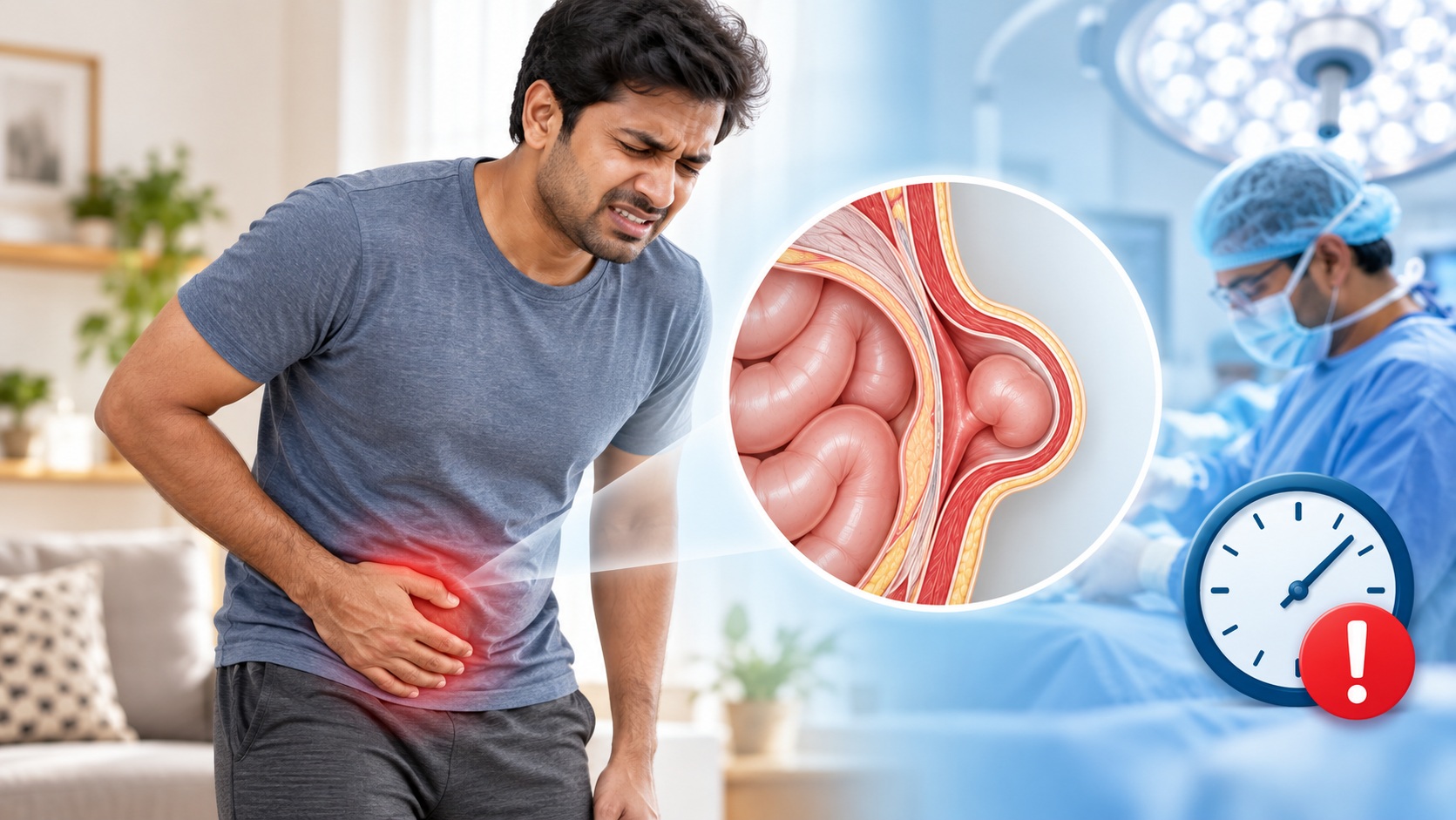
hernia that has grown large or growing, the pain is not going, limiting daily life activities and has the risk to cut off blood supply may require surgery. Depending on the diagnosis and other health conditions there can be planned surgery or emergency surgery.
Hernia Symptoms – Stages of progress
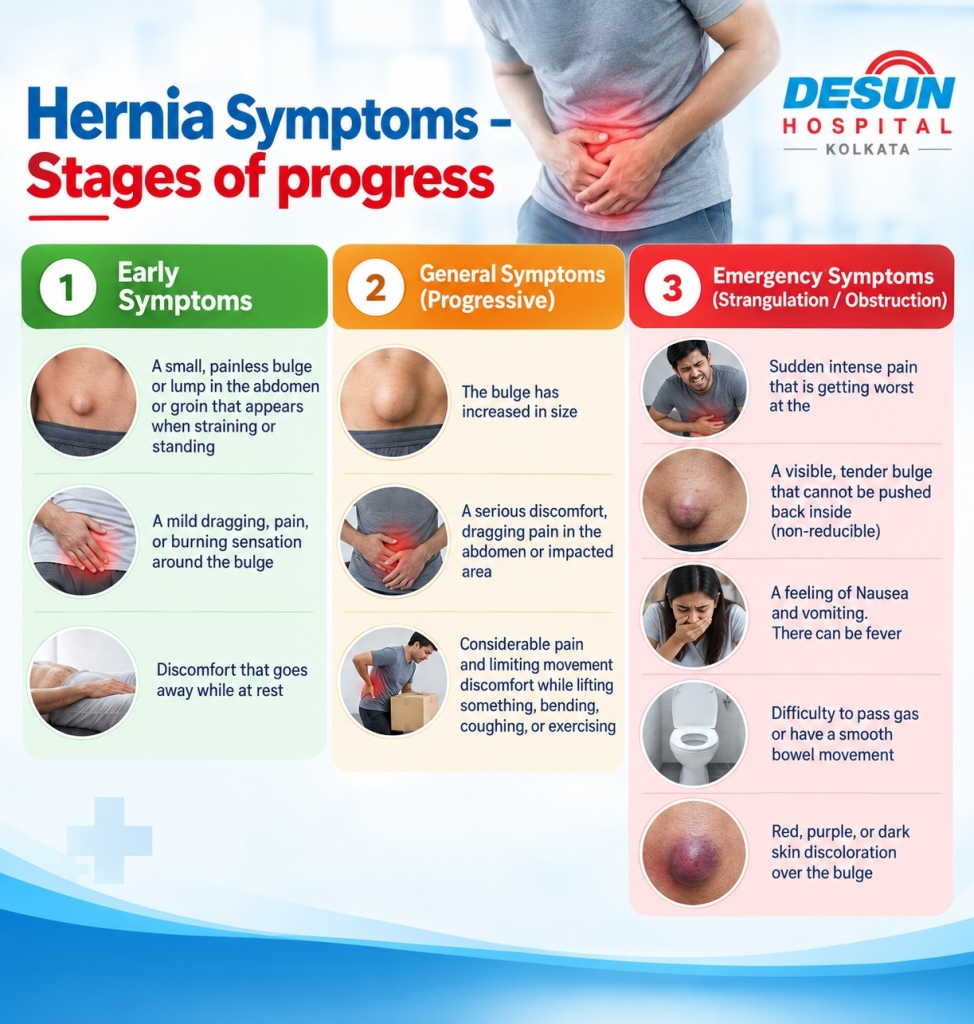
Early Symptoms:
- A small, painless bulge or lump in the abdomen or groin that appears when straining or standing
- A mild dragging, pain, or burning sensation around the bulge
- Discomfort that goes away while at rest
General Symptoms (Progressive):
- The bulge has increased in size
- A serious discomfort, dragging pain in the abdomen or impacted area
- Considerable pain and limiting movement discomfort while lifting something, bending, coughing, or exercising
Emergency Symptoms (Strangulation / Obstruction):
- Sudden intense pain that is getting worst at the
- A visible, tender bulge that cannot be pushed back inside (non-reducible)
- A feeling of Nausea and vomiting. There can be fever
- Difficulty to pass gas or have a smooth bowel movement
- Red, purple, or dark skin discoloration over the bulge
Expert Opinion
“A hernia may initially cause only a small swelling, discomfort or a feeling of heaviness, leading many people to postpone treatment. However, a hernia does not usually resolve on its own and may gradually increase in size or cause complications. Surgery may need to be considered sooner when the swelling becomes painful, progressively enlarges, becomes difficult to push back, or starts interfering with daily activities. Sudden severe pain, vomiting, abdominal distension or a hernia that becomes firm and cannot be pushed back can indicate an emergency and requires immediate medical attention. Early evaluation by a surgeon can help determine the appropriate treatment and prevent avoidable complications.”
-Consultant General and Laparoscopic Surgeon
-Desun Hospital, Kolkata
Facilities at Desun Hospital (Kolkata)
Desun Hospital provides
comprehensive general and laparoscopic surgical packages for various types of hernias (including inguinal, umbilical, incisional, femoral, and hiatal):
- Surgical Approaches: Advanced minimally invasive laparoscopic repairs alongside traditional open options.
- Infrastructure: Modern steel operation theatres (OT) and specialized intensive care units (ICCU).
- Diagnostics & Support: In-house diagnostic labs, digital imaging, and 24-hour pharmacy support.
- Patient Services: Cashless Mediclaim/TPA desk, comfortable post-operative recovery rooms, and transparent billing.
Emergency Hernia Surgery Facilities at Desun Hospital
For acute complications like a strangulated or obstructed hernia, rapid intervention is critical:
- 24/7 Emergency Readiness: Round-the-clock emergency department staffed by trained trauma and acute care specialists.
- Triage & Stabilization: Immediate nurses and medical teams complete assessing vital signs to fast-track timely treatment of emergency cases.
- Emergency Surgeries: Immediate access to operation theatres equipped for urgent intervention to restore blood flow and repair compromised tissue.
- Emergency Support: Dedicated 24x7 ambulance assistance for patient transport and transfer stabilization. You can contact their emergency desk directly at 9051715171.
Types and Locations of Hernias
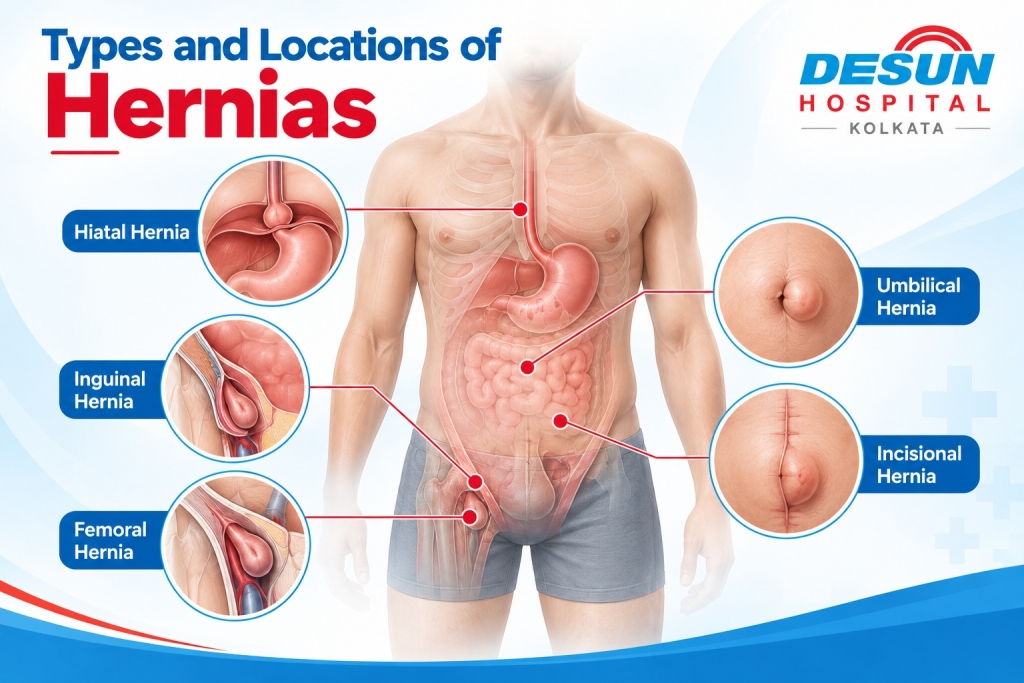
When an internal organ pushes through a weak spot in the surrounding muscle or connective tissue, it appears as bulge, that may be tender to touch, there can be little too much pain. This is most common feature of a hernia.
- Inguinal Hernia: Mostly occurs in the groin area. It is a result of the fat of intestine or abdomen area pushes into the inguinal canal.
- Femoral Hernia: Mostly appears in the upper thigh/outer groin area. In this case the abdominal or intestinal fat push into the femoral canal.
- Umbilical Hernia: Mostly happens around the belly button (navel). The intestines or abdominal fat push through the abdominal wall near the navel and a bulge form in the area that is more prominently visible over time.
- Hiatal Hernia: The upper part of the stomach pushes upward through the diaphragm into the chest. Here the upper portion of the stomach push upward towards the chest through the diaphragm.
- Incisional Hernia: Happens at the site of a past surgical scar. Abdominal organs or tissues push through the weakened healing incision.
Non-Surgical vs. Surgical Stages
| Feature |
Non-Surgical Stage (Watchful Waiting) |
Surgical Stage (Requires Repair) |
Emergency Stage (Immediate Surgery) |
| Hernia Status |
Reducible (Can be easily pushed back in when lying down). |
Enlarging or Persistent (Grows larger or causes daily discomfort). |
Strangulated or Obstructed (Trapped tissue with cut-off blood supply). |
| Pain Level |
None to mild. Dull ache only during heavy lifting or straining. |
Consistent pain, burning, or a heavy dragging sensation that disrupts daily life. |
Sudden, severe, sharp pain at the site that rapidly worsens. |
| Organ Impact |
No blockage. The organ slides in and out of the defect without functional issues. |
Mild interference. May cause indigestion or constant physical limitations. |
Complete blockage. Intestines are trapped, causing nausea, vomiting, or no bowel movements. |
| Bulge Appearance |
Small, soft lump that disappears when resting. Normal skin colour. |
Permanent visible lump that stays prominent. Normal skin colour. |
Firm, very tender lump that may turn red, purple, or dark. |
| Medical Action |
Observation by a doctor; lifestyle changes (avoiding heavy lifting, managing coughs). |
Scheduled elective surgery (Laparoscopic or open mesh repair) to prevent complications. |
Emergency surgery within hours to save the trapped tissue and prevent sepsis. |
Patient Success Story
Stay healthy, stay aware and strictly follow medical advice by specialist doctor if you have hernia. In case of the symptoms do not delay consulting with specialist doctor.
 90 5171 5171