Knee Pain – Painkillers to Surgery: Understanding the Journey of Knee Arthritis
August 28, 2026
Knee replacement or
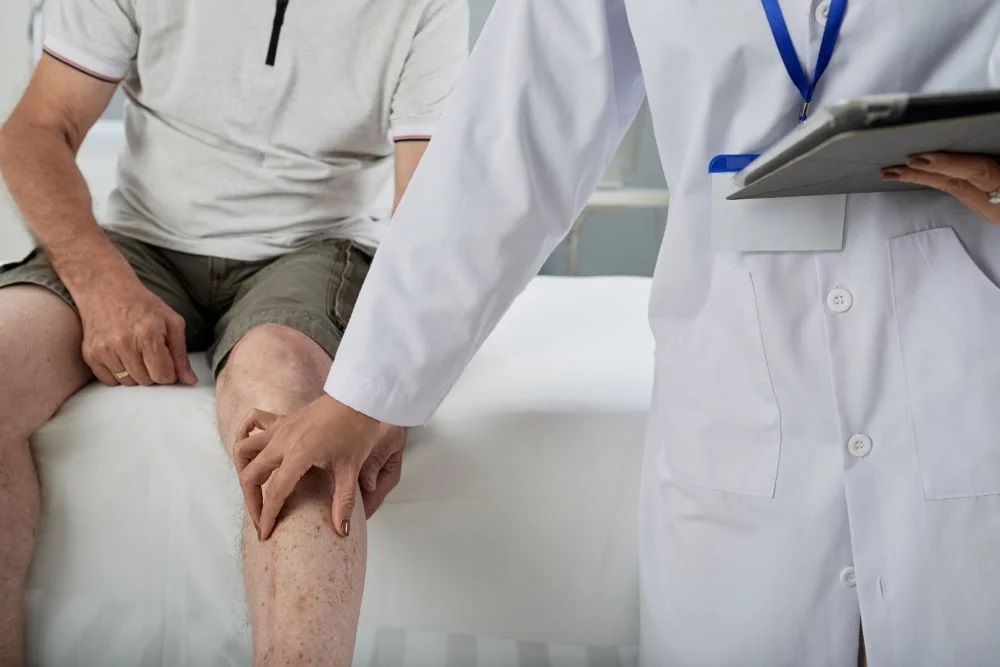
Total Knee Replacement (TKR) is the option to help the patient walk and do daily activities daily and also manage the pain when there are structural changes due to prolonged damage of the knees due to advanced arthritis, bone loss or even injuries or worn out from wrong postures or injury. In a lot of cases knee pain or mild degeneration associated pain can be controlled with medication, exercises, physiotherapy, and lifestyle changes. In some cases, the degeneration is severe and surgery remains the only option. It is best to consult with orthopaedics as soon there is persistent knee pain that returns as soon as the painkiller effect is over. Then follow medical advice and avoid self-medication. Diagnosis and reviews as per orthopaedics advice will help one to know on the progress of the denegation and in case there is requirement for knee replacement surgery.
Symptoms That May Require Knee Surgery
The
orthopaedics will evaluate the patient for the surgical options such as arthroscopy, ligament reconstruction, or a partial/total knee replacement. In case the patient experience:
- Mechanical locking: The knee physically jams in or locks in place, preventing one from fully bending or straightening it and severely hindering movement.
- Giving way: The joint clasps unusually during normal walking, turning, or stepping up or down, indicating serious ligament tears or severe cartilage damage.
- Constant resting pain: Intense pain that persists while sitting or sudden bouts of pain that creates sleep disturbance during the night.
- Treatment failure: Pain, stiffness, and chronic swelling that is not responding anymore to physiotherapy, anti-inflammatory medications, or joint injections.
- Visible joint deformity: The knee begins to push outward or moves inward due to advanced, bone friction due to cartilage loss.
- Severe functional limits: An inability to stand for long, climb stairs, or walk for more than 15–20 minutes without significant distress.
When to See an Orthopaedic Specialist
As the symptoms grow persistent and returns in closer frequency or do not go away fully is the time to consult again or immediately with the orthopaedics or
orthopaedics surgeon.
- Immediate Medical Attention (Go to the Emergency or Urgent Medical Care)
- One can hear a pop sound accompanied by sudden, severe pain during an injury.
- The knee is visibly looking unusual, bent or bending at unusual angle, or completely dislocated.
- One cannot bear or carry any weight on the leg whatsoever or stand for few minutes or not at all stand up.
- The joint is getting hot, there is redness , sudden swelling, and accompanied by a fever (signs of a serious joint infection).
- Within a Few Days to a Week
- Prominent visible swelling or redness appear within hours of a sports or twisting, injury.
- There is a distinct clicking sound, cracking, or grinding sensation when moving the joint.
- The range of motion is very restricted compared to your other leg.
- Within 2 to 4 Weeks
- Mild to moderate knee pain that do not fully improve despite intake over the counter pain killers or anti-inflammatory medicines, taking rest, applying ice and doing some movement.
- Serious stiffness that makes it difficult to stand up from a low chair, climb stairs or slightly uneven surface or get in and out of a vehicle.
Expert Opinion
“Knee arthritis is a progressive condition, but surgery is not the first step for every patient. Treatment usually begins with lifestyle modifications, weight management, physiotherapy and appropriate pain relief, with injections or other interventions considered when symptoms persist. Knee replacement surgery may be recommended when pain, stiffness and reduced mobility significantly affect daily life, and non-surgical treatments no longer provide adequate relief. The key is to choose the right treatment at the right stage of the disease.”
-Consultant Orthopaedic Surgeon
-Desun Hospital, Kolkata
Knee Pain OPD and Knee Replacement Surgery at Desun Hospital
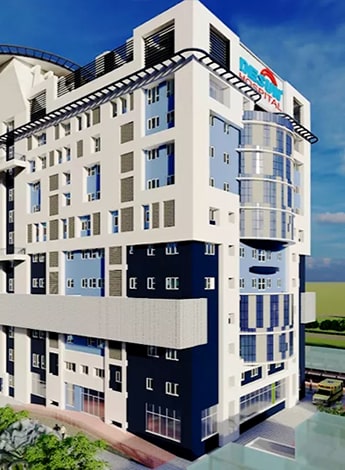
Desun Hospital located at the EM Bypass (Desun More – Kasba Golpark) in Kolkata, provides comprehensive outpatient diagnostics for knee pain and regularly performs advanced Total Knee Replacement (TKR) surgeries. There are high number of success stories in knee replacement and knee pain in complicated and serious cases too.
Knee Pain Outpatient Department (OPD) at Desun Hospital
Anyone suffering from severe knee pain, structural injuries, or advanced arthritis, can consult with their orthopaedic specialists at the OPD through prior appointment. Call 9051715171 for Appointment.
- OPD Timings: The Outpatient Department (OPD) at Desun runs from 8:00 AM to 8:00 PM, Monday to Saturday. Patients are requested to arrive as per appointment and appointment updates.
- Orthopaedic Specialists: Senior orthopaedic and joint replacement surgeons help manage knee pain treatments and are available for consultations by appointment.
- Booking an Appointment: One can comfortably schedule a visit by calling the hospital desk directly at +91 90517 15171
Total Knee Replacement (TKR) Facilities
When conservative methods like medications or lifestyle changes stop providing relief, Desun Hospital's surgical unit offers full care for TKR
- Pre-Surgery Evaluations: The hospital features an in-house, fully integrated diagnostic suite equipped with high-resolution digital X-rays, MRI machines, and blood screening services needed to assess your suitability for surgery.
- Surgical Environment: TKR is performed inside dedicated steel modular operation theatres designed specifically to minimize infection risks-a vital prerequisite for joint replacement surgeries involving artificial implants.
- Post-Operative Rehabilitation: The hospital has a focused physiotherapy and physical rehab team that assists patients with bedside mobilization beginning the very next day after a knee replacement to promote quick recovery and efficient post-surgery pain and infection
 90 5171 5171