How stress can affect your heart and overall cardiac health
September 25, 2026Stress is a normal response to challenging situations. A deadline, financial concern, family problem or sudden emergency can trigger the body's natural “fight-or-flight” response. Short periods of stress are not necessarily harmful. The concern arises when stress becomes frequent, intense or prolonged.
Chronic stress can influence heart health directly through the body's stress response and indirectly by affecting sleep, diet, physical activity, alcohol or tobacco use and adherence to medical treatment. Understanding this connection is an important part of protecting cardiovascular health.
What happens to the heart when you are stressed?
When the body perceives stress, hormones such as adrenaline and cortisol are released. These hormones can:
Increase heart rate
Raise blood pressure
Increase alertness
Cause blood vessels to constrict
Increase blood glucose availability
These responses are useful during short-term emergencies. Once the stressful situation passes, the body normally returns towards its resting state. The problem is that persistent stress can keep these responses activated repeatedly.
How can chronic stress affect cardiovascular health?
Blood pressure: Stress can cause temporary increases in blood pressure. Frequent stress may contribute to difficulty controlling blood pressure, particularly when combined with other risk factors. High blood pressure itself increases the risk of heart attack, stroke, heart failure and kidney disease.
Heart rate and rhythm: Stress can cause palpitations and a faster heartbeat. People may become more aware of their heartbeat during periods of anxiety or emotional strain. Persistent or recurrent palpitations should not automatically be attributed to stress, however. Heart rhythm disorders can have many causes and may require medical evaluation.
Unhealthy coping behaviours: Stress can indirectly affect heart health by changing everyday habits. These behaviours can increase cardiovascular risk over time. Some people respond to stress by:
Smoking or increasing tobacco use
Drinking more alcohol
Eating high-calorie foods
Becoming physically inactive
Sleeping poorly
Skipping medications
Avoiding routine medical care
Sleep disruption: Stress and poor sleep can reinforce one another. Persistent stress may make it difficult to fall asleep or stay asleep. Poor sleep can in turn affect blood pressure, appetite, mood and metabolic health.
Inflammation and metabolic health: Chronic psychological stress may influence inflammatory and metabolic pathways. The relationship between stress and cardiovascular disease is complex and involves several biological and behavioural mechanisms.
Can stress cause a heart attack?
Stress is not usually the sole cause of a heart attack. However, severe emotional or physical stress can sometimes trigger cardiovascular events, particularly in people who already have underlying cardiovascular disease or risk factors. There is also a rare condition called stress-induced cardiomyopathy, in which severe emotional or physical stress can temporarily weaken the heart muscle. Because chest symptoms can have serious causes, they should never automatically be dismissed as stress.
Stress and heart health in everyday life
Stress may become particularly concerning when it continues for weeks or months and begins affecting normal functioning, and addressing these issues can benefit both mental wellbeing and cardiovascular health. Signs that stress may be affecting your health include:
Persistent difficulty sleeping
Frequent headaches
Constant tiredness
Irritability
Changes in appetite
Reduced physical activity
Frequent palpitations
Difficulty concentrating
Increased dependence on tobacco or alcohol
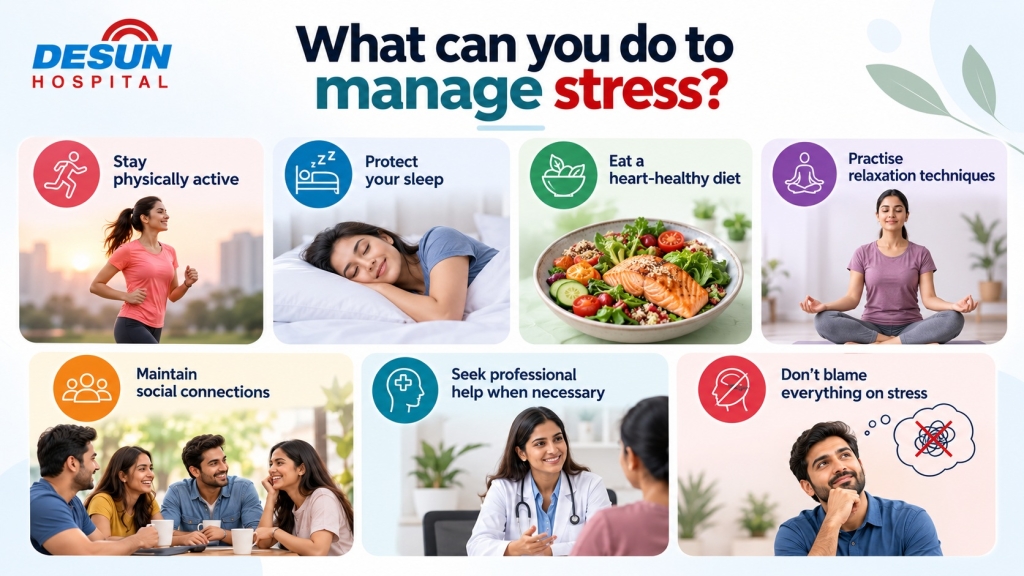
What can you do to manage stress?
Stress cannot always be eliminated. The goal is to develop healthier ways of responding to it.
Stay physically active: Regular physical activity can support cardiovascular health and help manage stress. Walking, swimming, cycling, yoga or other enjoyable forms of exercise can be incorporated into daily routines.
Protect your sleep: Maintain consistent sleep and wake times where possible. Reduce stimulating activities close to bedtime and create a comfortable sleep environment.
Eat a heart-healthy diet: Choose a balanced diet containing vegetables, fruits, whole grains, pulses, nuts and appropriate protein sources. It is important to limit intake of salt, added sugar and unhealthy fats.
Practise relaxation techniques: Breathing exercises, meditation, yoga and mindfulness practices can help some people manage stress.
Maintain social connections: Talking with trusted friends, family members or professionals can help people cope with prolonged stress.
Seek professional help when necessary: If stress, anxiety or persistent low mood is interfering significantly with everyday life, speaking to a qualified mental health professional can be an important step.
Don’t blame everything on stress: One of the most important messages about stress and heart health is that stress should not become an explanation for every physical symptom.
While women, older adults, and people with diabetes may sometimes experience less typical heart attack symptoms, seek urgent medical attention for symptoms such as:
Chest pressure, tightness or pain
Pain spreading to the arm, shoulder, jaw or back
Severe breathlessness
Fainting or near-fainting
Sudden sweating accompanied by chest discomfort
Sudden unexplained weakness
Expert Opinion
“Chronic stress can affect heart health by increasing blood pressure, heart rate and levels of stress hormones. It may also contribute to poor sleep, unhealthy eating, physical inactivity and other habits that increase cardiovascular risk. Managing stress through regular exercise, adequate sleep, relaxation techniques and healthy routines can support better cardiac health.”
-Consultant Cardiologist
-Desun Hospital, Kolkata
Protecting your heart is a long-term process
Managing stress is one part of cardiovascular prevention. It works best alongside regular physical activity, a balanced diet, adequate sleep, avoiding tobacco, maintaining a healthy weight and monitoring conditions such as blood pressure, diabetes and cholesterol.
At Desun Hospital Kolkata, individuals with cardiac symptoms or cardiovascular risk factors can seek appropriate medical evaluation and specialist care. Taking care of your heart also means taking care of the life you lead around it. Managing stress, recognising warning signs and maintaining healthy habits can all contribute to better cardiovascular wellbeing
 90 5171 5171
 Stress is a normal response to challenging situations. A deadline, financial concern, family problem or sudden emergency can trigger the body's natural “fight-or-flight” response. Short periods of stress are not necessarily harmful. The concern arises when stress becomes frequent, intense or prolonged.
 Stress cannot always be eliminated. The goal is to develop healthier ways of responding to it.