Festive Burnout Is Real: Easy Steps to Protect Your Mental Peace This Season
October 15, 2026

The festive season is supposed to be joyful. But for many people, the festive season also brings packed schedules, family obligations, social commitments, shopping, financial pressure, travel, work deadlines and the expectation to “enjoy.”
Sometimes, the result is exhaustion rather than celebration. You may feel irritable, overwhelmed, unable to concentrate or simply desperate for some quiet time. That’s not necessarily a sign that you’re “not enjoying Pujo.” It may simply mean that your mind needs a break.
What is festive burnout?
“Festive burnout” is not a formal medical diagnosis. It is a useful way to describe the physical and emotional exhaustion that can accompany an unusually demanding festive period. Stress itself is a normal response to challenging situations. But excessive or prolonged stress can affect both mental and physical well-being. The World Health Organization notes that stress can be associated with anxiety, irritability, difficulty concentrating, headaches, body aches, stomach problems and sleep difficulties.
You don’t have to attend everything
One of the easiest ways to protect your mental peace is to stop treating every invitation as an obligation by politely declining because setting boundaries isn’t selfish, it’s a practical part of looking after yourself.
While social media can create the impression that everyone else is having the perfect festive season, it’s important not to turn the festive season into a performance. Even as social media platforms extol the importance of “perfect” in all aspects – outfits, pandal visits, family photographs, celebrations – real life is quite different. All of us are allowed to have an ordinary evening, stay home, and enjoy the season without documenting every moment.
Protect your sleep
Late nights are almost inevitable during the festive season, but chronic sleep deprivation can make stress harder to manage. Try to maintain some consistency in your sleep routine, particularly on days when you don’t have late-night plans. The World Health Organization recommends consistent sleep habits and notes that adequate sleep helps the body and mind recover from stress.
Keep moving
You don’t need an intense workout; a 20-30-minute walk, gentle stretching, dancing or another enjoyable form of movement can help you stay physically active. Regular exercise is also one of the practical strategies recommended for managing stress.
Eat and hydrate regularly
Skipping meals because you’re busy can leave you feeling even more exhausted, so it is important to maintain reasonably regular meals and drink enough fluids. You can enjoy festive food without making every meal an indulgence, and it is important to think of balance rather than restriction.
Make space for quiet
Give yourself 10-15 minutes every day without notifications, work messages or social media. You can just sit quietly, listen to music, take a walk, practise slow breathing, read something, or talk to someone you trust. Small pauses can help prevent the feeling that the entire day is happening at once. The World Health Organization’s stress-management resources emphasise practical techniques that can be incorporated into everyday life, even in short periods.
Stay connected, but choose the right people
Festivals can be a wonderful opportunity to reconnect with family and friends. Meaningful social connection can also support emotional well-being. But if a particular interaction consistently leaves you distressed or overwhelmed, it is okay to create some distance.
Know when stress needs professional help
Feeling stressed during a busy period is common but if anxiety, low mood, irritability, sleep problems or emotional distress persist and begin affecting your work, relationships or everyday functioning, consider speaking to a mental health professional. And if you ever feel unable to cope or have thoughts of harming yourself, seek urgent
professional help and reach out to someone you trust immediately.
A simple festive mental-health checklist
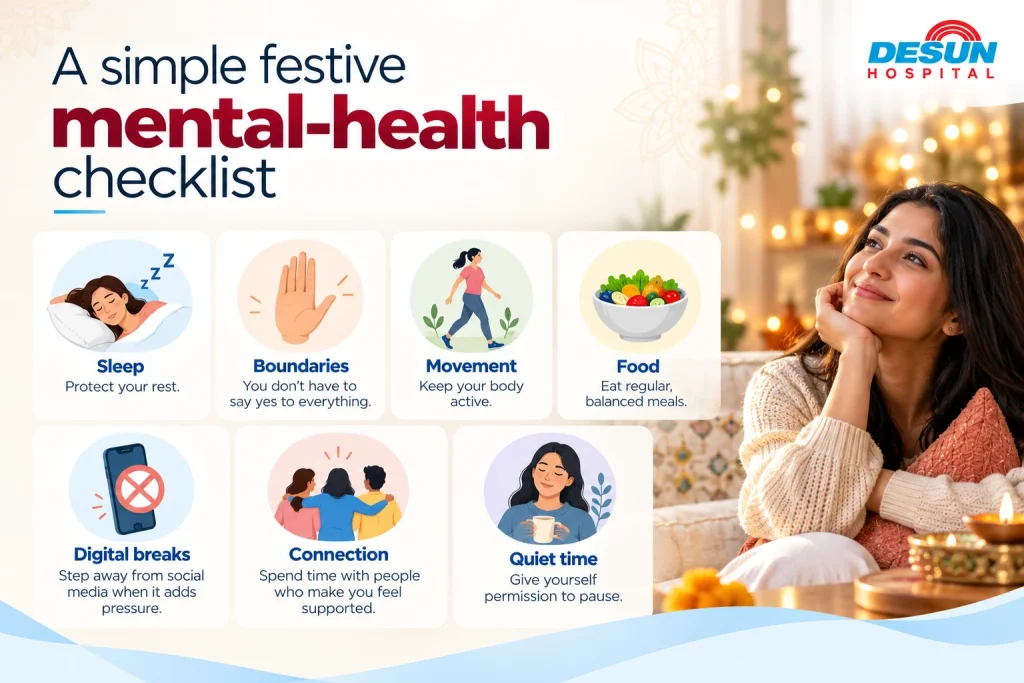
Sleep: Protect your rest.
Boundaries: You don’t have to say yes to everything.
Movement: Keep your body active.
Food: Eat regular, balanced meals.
Digital breaks: Step away from social media when it adds pressure.
Connection: Spend time with people World Health Organization make you feel supported.
Quiet time: Give yourself permission to pause.
Expert Opinion
“Festive seasons can bring joy, but the pressure of social commitments, family expectations, shopping and endless preparations can also lead to emotional exhaustion. Protecting your mental well-being starts with setting realistic expectations, learning to say no when necessary, getting adequate sleep and taking short breaks to unwind. Make time for activities you enjoy, maintain regular meals and physical activity, and remember that you do not have to attend every gathering or make everything perfect. If stress, anxiety or low mood persists and begins to affect daily life, seek support from a qualified mental health professional.”
-Consultant Psychologist
-Desun Hospital, Kolkata
The Desun takeaway
The best festive season memories aren’t created by doing the most; they are created by being present enough to enjoy what matters. So, this festive season, make room not only for celebrations, but also for rest, boundaries, laughter and quiet moments. Your mental peace also deserves a place on your festive schedule, and a break from work.
 90 5171 5171