Dengue – Precaution-Prevention- Medical Care
September 15, 2026

In West Bengal including Kolkata there has been around 3900 plus dengue cases and due to agile action, this is 50% less than last year during the same period last year 2025.
Dengue is a serious, mosquito-borne viral infection caused by four distinct variants of the dengue virus (DENV-1, DENV-2, DENV-3, and DENV-4). Humans do not directly get infected with Dengue, the virus is not contagious to humans, it is primarily transmitted to humans through the
bite of infected female Aedes aegypti and Aedes albopictus mosquitoes, which typically bite during the day time and mostly early morning to mid-day they are more active and even in early evening - around sunrise and sunset. The disease is common in tropical and subtropical regions like India.
Symptoms Timeline
Post infected mosquito bite usually symptoms appear within
4 to 10 days and impact generally last between 2 and 7 days.
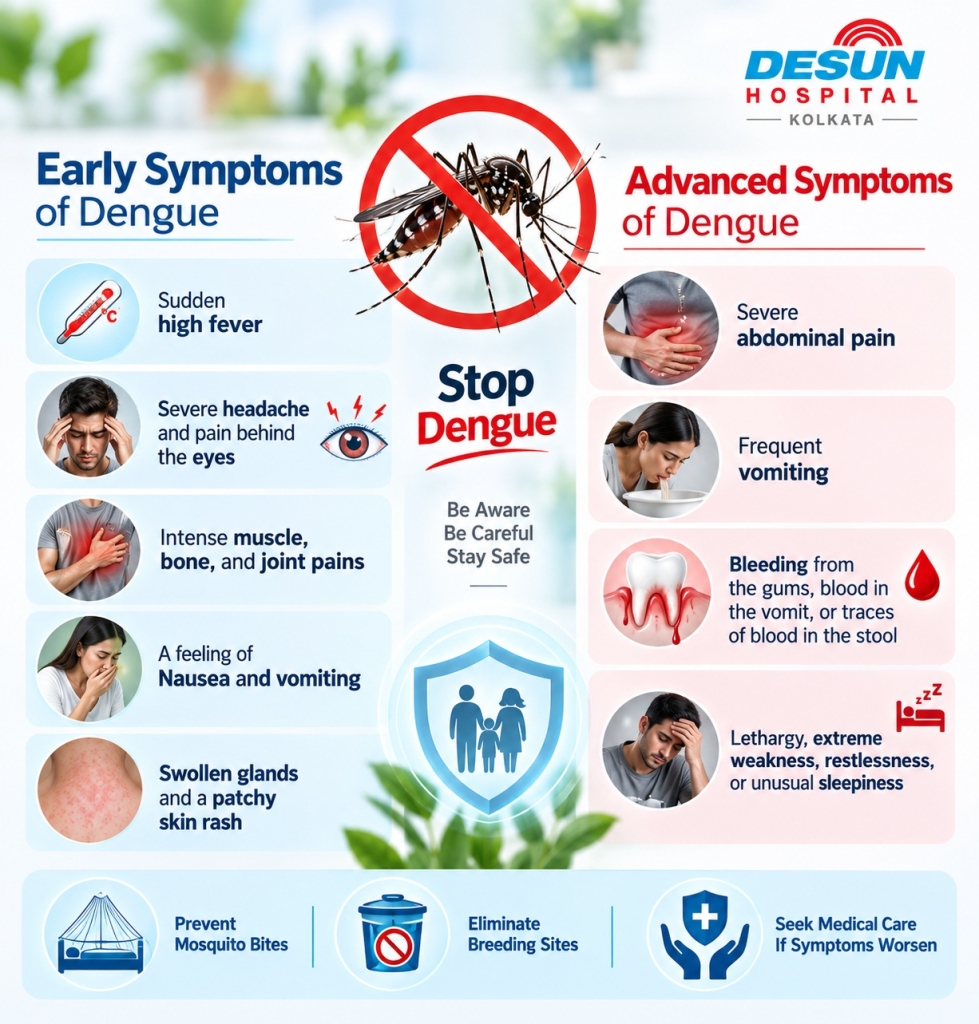
Early Symptoms (Febrile Phase)
At the initial stages there is sudden weakness followed by body pain or intense body pain and it is often called "break-bone fever" due to the extreme body pain it causes. Symptoms include:
- Sudden high fever (reaching up to 104°F / 40°C)
- Severe headache and pain behind the eyes (retro-orbital pain)
- Intense muscle, bone, and joint pains
- A feeling 0f Nausea and vomiting
- Swollen glands and a patchy skin rash that appears a few days after the fever starts
Advanced Symptoms (Critical warning Symptoms)
As the fever begins to subside (usually 3 to 7 days after onset), there is a
critical 24- to 48-hour window. Even though the fever is not there but for some individuals the disease progress to a severe form of the illness due to fluid leaking out of blood vessels. The warning signs:
- Severe abdominal pain or belly tenderness
- Frequent vomiting (3 or more times within 24 hours)
- Bleeding from the gums or nose, blood in the vomit, or traces of blood in the stool
- Lethargy, extreme weakness, restlessness, or unusual sleepiness
Serious & Life-Threatening Symptoms
If the critical stage gets worst, it can lead to severe dengue shock syndrome, which includes
Dengue Haemorrhagic Fever (DHF) and
Dengue Shock Syndrome (DSS). These are medical emergencies characterized by:
- Severe internal bleeding and massive plasma leakage
- Very low blood pressure (shock) leading to cold, clammy skin, rapid heartbeats, weak pulse
- Respiratory problem, shallow breathing or difficulty breathing due to fluid accumulation around the lungs
- Severe organ impairment, including acute liver failure or altered mental consciousness
Medical Care & Tests
When to See a Doctor
On the onset of body pain and fever if there is dengue happening around the city or area or have travelled recently from an area where there are cases of Dengue that time one must
immediately consult with doctor and follow medical advice. It is best not to wait for critical or serious symptoms to appear. If one experience
any of the critical phase warning signs (like severe stomach pain or vomiting) post the fever fades or accompanied by fever it is best to reach an hospital with emergency medical care and 24 hours admission facility and with adequate medical facilities all under one roof.
Medical Tests
Doctors prescribes specific laboratory testing to confirm dengue and know health condition as required:
- Diagnostic Blood Tests: During the first week of symptoms, an NS1 antigen test or a molecular PCR test detects the virus itself. After the first week, an IgM antibody test checks for the body's immune response.
- Complete Blood Count (CBC): This vital test monitors your platelet levels (which drop significantly in dengue) and haematocrit levels (an increase indicates dangerous fluid leakage from blood vessels).
Medical Treatment
There is
no specific antiviral medicine or cure for dengue virus. Treatment is symptom oriented.
- Fever and Pain Management
- CRITICAL WARNING: Do not do self-medication and do share what other routine or medicines one intake regularly or often.
- Hydration: Complete rest and plenty of fluids intakes and fluid that containing electrolytes (such as oral rehydration solutions, coconut water, or clean water) to prevent dehydration from vomiting and sweating.
Emergency & Hospital Admission Cases
Hospitalization is required for
pregnant women, infants, the elderly, individuals with chronic health conditions, and
anyone displaying any critical warning signs. Hospital care involves:
- Continuous monitoring of vital signs and daily blood counts
- Intravenous (IV) fluids to stabilize blood pressure and prevent shock
- Blood or platelet transfusions in cases of life-threatening internal bleeding or critically low platelet counts
Recovery Phase
Once the critical phase is over, leaked fluids are naturally reabsorbed back into the bloodstream. During this time,
appetite improves, gastrointestinal symptoms clear up, and blood counts begin to stabilize. Most people recover fully within a week or two, though a feeling of
prolonged fatigue and weakness can persist for several weeks.
Family & Community Awareness and Precautions
The dengue virus is carried by mosquitoes that grow near human establishments, community action is the only way to stop an outbreak.
Precautions for the Household & Patient
- Protect the Sick Patient: For the first week of illness, an infected person has the live virus circulating in their blood. If a mosquito bites them, that mosquito will become infected and will spread the virus to other family members through mosquito bite. The patient must rest under a mosquito net or in a well-screened room to break this cycle.
- Personal Defence: Everyone in the house should wear long-sleeved shirts and long pants. Apply mosquito repellents and also spray mosquito replant containing ingredients like DEET, picaridin, or oil of lemon eucalyptus to exposed skin.
Community Environmental Management
- Control Standing Water: Aedes mosquitoes breed in clean, stagnant water. Communities must systematically empty, clean, or cover any items that collect rainwater-such as flowerpots, old tires, plastic buckets, birdbaths, and uncovered water storage barrels.
- Mosquito Entry Restrictions: Ensure window and door mesh screens are intact to prevent mosquitoes from entering homes.
- Information and Coordination: Cooperate with local health initiatives for biological larvicides, spatial insecticide spraying (fogging) during outbreaks, or community-wide clean-up drives.
*https://www.thehindu.com/news/national/west-bengal/dengue-cases-in-west-bengal-cross-4000-seven-dead-cm-says-situation-under-control/article71418884.ece
**https://www.telegraphindia.com/west-bengal/kolkata/50-lower-than-2025-bengal-records-over-4000-dengue-cases-this-year-suvendu-adhikari-prnt/cid/2177906
Expert Opinion
“Dengue should not be taken lightly, especially during periods of increased mosquito activity. Prevention begins at home by eliminating stagnant water, using mosquito repellents and wearing protective clothing. If fever, severe headache, body ache, nausea or rash develops, timely medical evaluation is important. Patients should stay well hydrated and avoid self-medication, particularly aspirin and ibuprofen. Most importantly, warning signs such as severe abdominal pain, persistent vomiting, bleeding, extreme weakness or breathing difficulty require immediate medical attention, as dengue can progress to a severe and potentially life-threatening condition.”
-Consultant Internal Medicine
-Desun Hospital, Kolkata
Desun Hospital in Kolkata provides comprehensive, 24/7 medical care for dengue patients, ranging from basic diagnostic testing to
critical care units for severe complications. Located on the
EM Bypass (Kasba, Golpark), it is highly accessible and operates round-the-clock, even on major public holidays.
Available Dengue Facilities at Desun
- 24/7 Advanced Fever Diagnostics: The hospital operates an in-house, NABL-accredited laboratory. They offer an Advanced Fever Check Package that includes essential dengue tests like NS1 Antigen, IgM/IgG Antibodies, and Complete Blood Counts (CBC) to monitor platelet drops and haematocrit levels.
- Massive Intensive Care Infrastructure: For severe dengue cases (such as Dengue Haemorrhagic Fever or Shock Syndrome), Desun features 94 ICU beds, each equipped with its own individual ventilator. Dedicated critical care specialists, like Dr. Amitabha Saha and Dr. Mohit Kharbanda, monitor severe complications including organ dysfunction, internal bleeding, and sudden drops in blood pressure.
- Advanced Blood Centre: Because severe dengue can cause platelets to crash to life-threatening levels, the hospital relies on its own blood bank facilities to provide rapid platelet and blood transfusions when medically required.
- Ambulance Network: Desun operates a 24-hour emergency ambulance dispatch network that services both Kolkata and surrounding West Bengal districts to quickly transport critical patients.
Emergency Contacts & Location
- Address: Desun More, 720, Eastern Metropolitan Bypass, Golpark, Sector I, Kasba, Kolkata, West Bengal 700107
- OPD Consultation: Call to book OPD consultation with specialist doctor 9051715171
- Nearest Metro: Hemanta Mukhopadhyay Metro Station (0.2 km away)
- 24/7 Emergency Helpline: +91 90517 15171
 90 5171 5171