Childhood Obesity: Causes, Health Risks and How Families Can Help
September 5, 2026
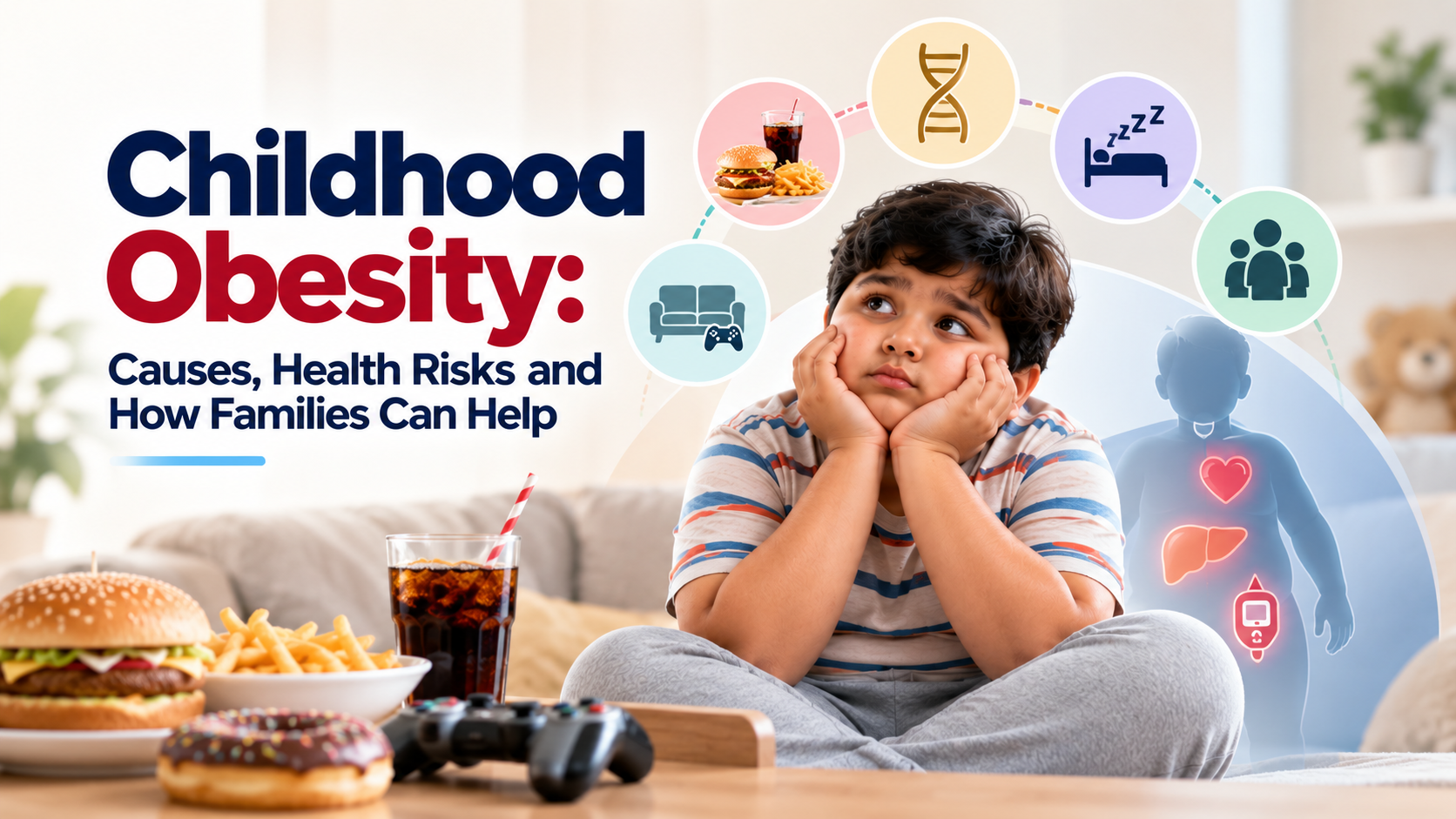
Children need adequate nutrition to grow, learn and develop. But when excess body weight accumulates during childhood, it can affect both immediate wellbeing and long-term health.
Childhood obesity is a complex health condition, not simply a result of eating too much or exercising too little. Genetics, diet, physical activity, sleep, family environment, socioeconomic factors and other influences can all play a role.
Recognising unhealthy weight gain early allows families and healthcare professionals to intervene before associated health problems become more difficult to manage.
What is childhood obesity?
Childhood obesity is generally assessed using body mass index (BMI) in relation to age and sex, rather than adult BMI cut-offs. Since children are continuously growing, their weight needs to be interpreted using age- and sex-specific growth charts or other appropriate paediatric standards.
A child who appears heavier than peers may not necessarily have obesity, while a child with an apparently normal body shape may still have an unhealthy growth pattern. A paediatrician or qualified healthcare professional can assess growth accurately.
Why does childhood obesity happen?
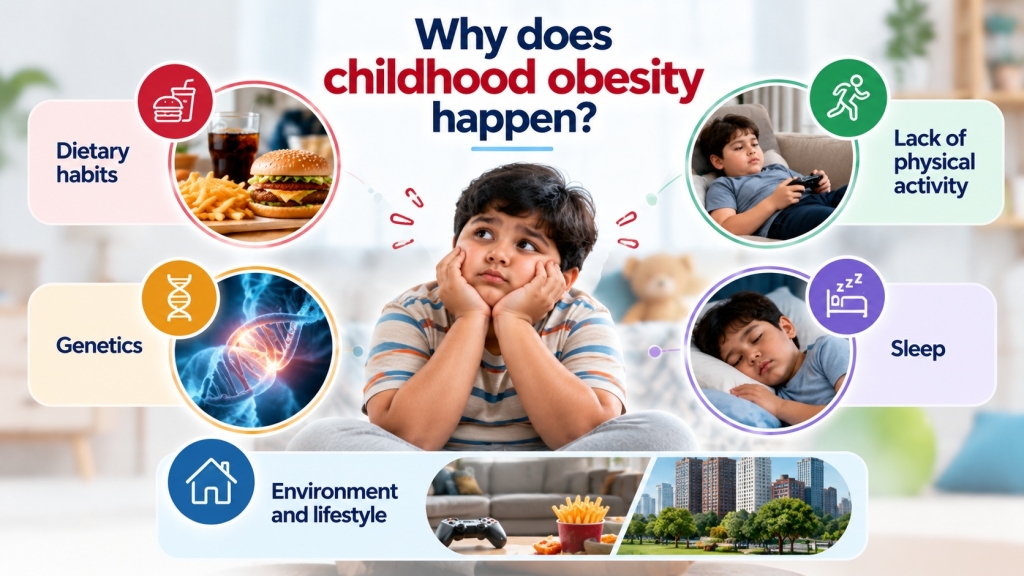
There is rarely one single cause. The primary causes are:
Dietary habits: Frequent consumption of foods and drinks high in added sugars, unhealthy fats and calories can contribute to excessive weight gain. Large portion sizes, frequent snacking and sugary beverages may also increase overall calorie intake.
Lack of physical activity: Children today may spend substantial amounts of time sitting, using phones, tablets, computers or watching television. Limited opportunities for active play can contribute to weight gain.
Genetics: Children with a family history of obesity may have a higher risk because of inherited biological factors as well as shared family habits.
Sleep: Insufficient or irregular sleep has been associated with an increased risk of unhealthy weight gain in children.
Environment and lifestyle: School routines, neighbourhood environments, access to healthy food, family schedules and social factors can all influence eating and activity patterns.
Why is childhood obesity a concern?
Excess weight during childhood can increase the risk of several health problems.
These may include:
- High blood pressure
- Abnormal cholesterol levels
- Insulin resistance and type 2 diabetes
- Fatty liver disease
- Sleep apnoea
- Joint and musculoskeletal problems
- Breathing difficulties
- Psychological distress and low self-esteem
Children with obesity may also experience social difficulties, teasing or bullying, which can affect emotional wellbeing.
Is childhood obesity only about appearance?
No. Focusing solely on appearance can be harmful and may make children feel ashamed of their bodies. The primary concern is health and healthy development, not conforming to a particular body shape. Children should be encouraged to develop healthy habits rather than being placed on restrictive diets without professional guidance.
What can parents do?
Small, everyday changes can make a significant difference. Make healthy food the family norm by offering a varied diet containing vegetables, fruits, whole grains, pulses, appropriate protein sources and other nutritious foods. Try to reduce consumption of sugary drinks, processed snacks and foods high in salt, sugar and unhealthy fats.
Encourage active play by creating regular opportunities for children to have age-appropriate physical activities, like playing outdoors, walking, cycling, swimming, sports and dancing. The goal should be enjoyable movement rather than punishment for eating.
It is crucial to limit sedentary screen time, and parents can establish reasonable household boundaries around recreational screen use and encourage activities that involve movement and social interaction.
Sleep should be a priority with consistent bedtime routines and adequate sleep are important components of healthy development.
Eat together, whenever possible, as family meals can encourage healthier food choices and provide an opportunity for parents to model balanced eating habits.
What should parents avoid?
Avoid:
- Crash diets
- Skipping meals
- Weight-loss supplements without medical advice
- Shaming or criticising a child's body
- Using food as a reward or punishment
- Comparing the child with siblings or classmates
If weight is becoming a concern, professional assessment is preferable to attempting an unsupervised weight-loss programme.
When should a child be evaluated?
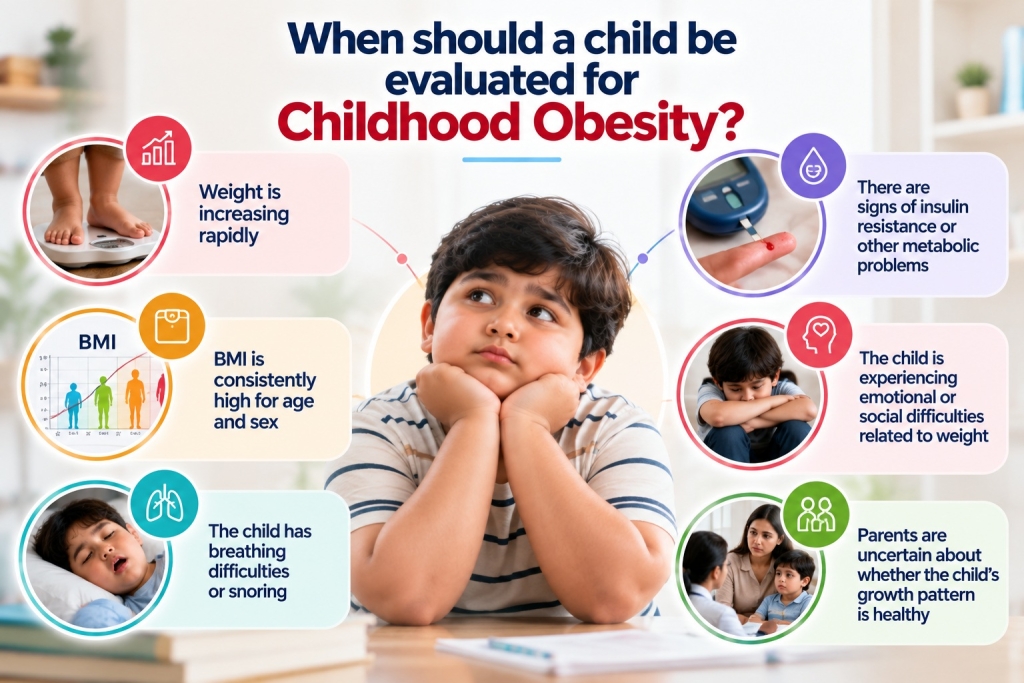
A paediatric assessment may be appropriate if:
- Weight is increasing rapidly
- BMI is consistently high for age and sex
- The child has breathing difficulties or snoring
- There are signs of insulin resistance or other metabolic problems
- The child is experiencing emotional or social difficulties related to weight
- Parents are uncertain about whether the child's growth pattern is healthy
A doctor, or a qualified dietician can assess height, weight, BMI percentile, growth trajectory, diet, activity, sleep and relevant family history.
Expert Opinion
“Childhood obesity can affect a child’s physical and emotional well-being and may increase the risk of health problems later in life. Unhealthy eating habits, excessive screen time, lack of physical activity and inadequate sleep can contribute to unhealthy weight gain. Families can help by encouraging balanced meals, active routines and healthy lifestyle habits rather than focusing on restrictive diets. Early guidance from a paediatrician can help ensure healthy growth and development.”
-Consultant Paediatrician
-Desun Hospital, Kolkata
Building healthier families
Children learn largely through observation. When the entire family eats balanced meals, stays active, sleeps adequately and develops healthy routines, the child is less likely to feel singled out. The objective is not rapid weight loss. In many children, depending on age and growth pattern, maintaining weight while continuing to grow taller may itself improve the weight trajectory. This should be determined by a
healthcare professional.
Healthy childhood habits are not about perfection. They are about creating a supportive environment in which children can grow, play and thrive. At
Desun Hospital Kolkata, parents can seek appropriate paediatric evaluation and guidance when they are concerned about a child's growth or weight.
 90 5171 5171