Causes and concern of Snoring and Sleep Apnoea
September 29, 2026
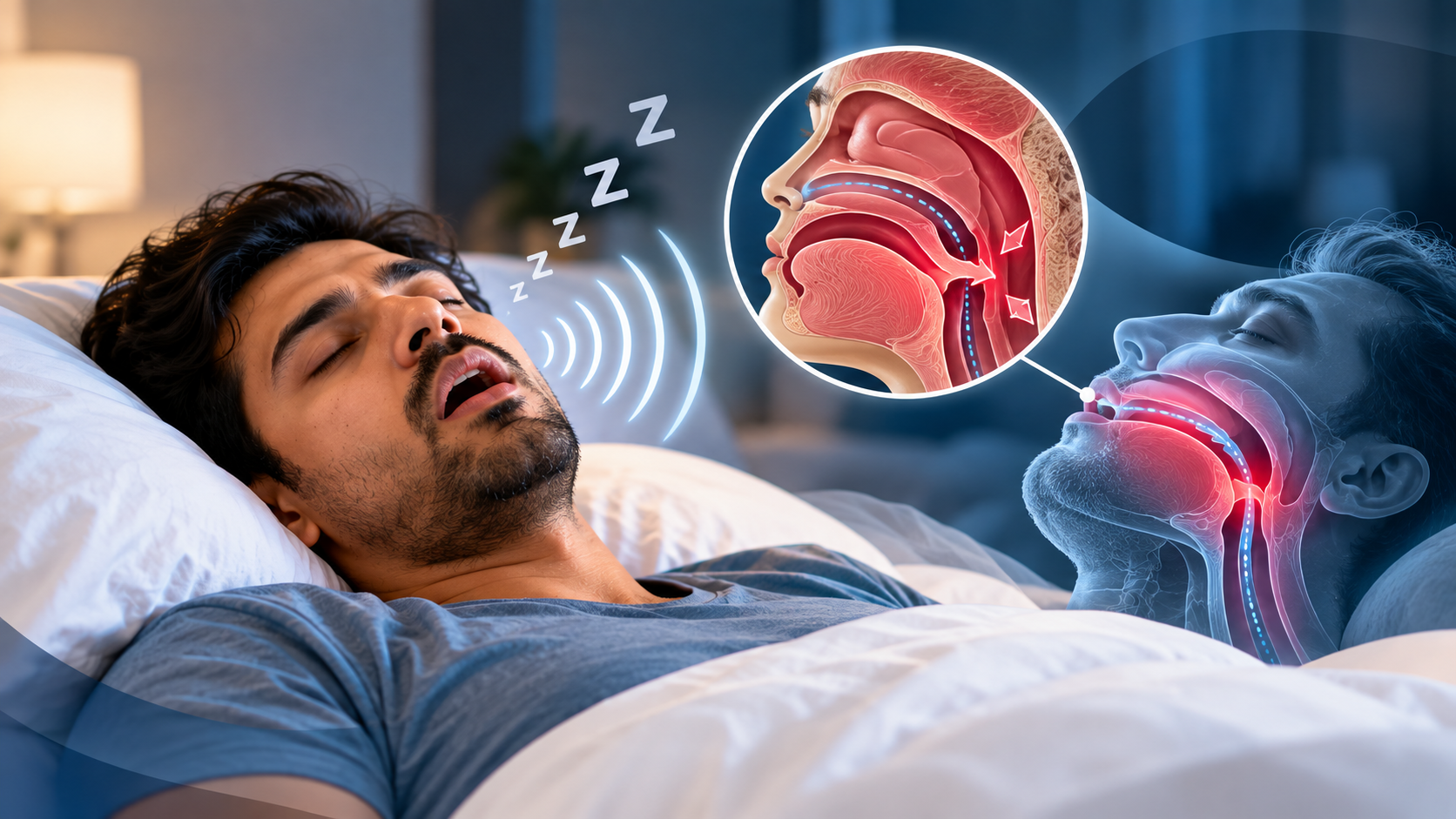
Snoring is often treated as a harmless nuisance, something that disturbs a partner or family member during the night. Occasional snoring may indeed be harmless. But loud, frequent snoring can sometimes be a sign of obstructive sleep apnoea (OSA), a sleep disorder in which breathing repeatedly becomes blocked during sleep.
Sleep apnoea is more than a problem of disturbed sleep. When left untreated, it can affect daytime alertness, blood pressure,
cardiovascular health and overall quality of life.
Why do people snore?
Snoring occurs when air struggles to move freely through the upper airway during sleep. As the muscles of the throat relax, the airway can become narrower. Air moving through the narrowed passage causes surrounding tissues to vibrate, producing the sound of snoring.
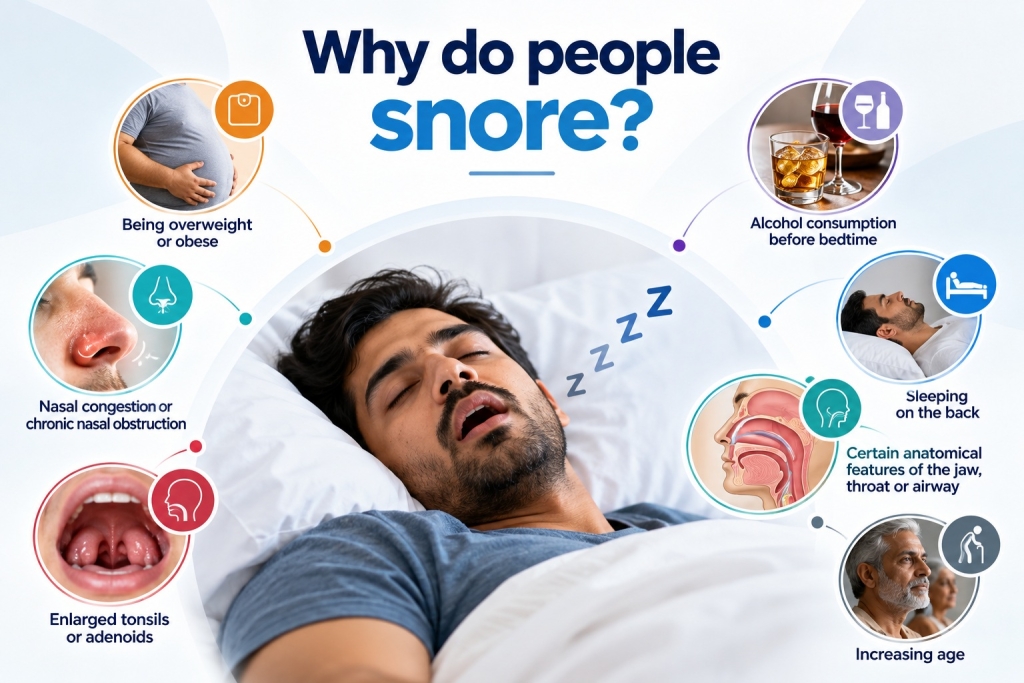
While not everyone who snores has sleep apnoea, certain patterns should raise concern. Several factors can increase the likelihood of snoring:
- Being overweight or obese
- Nasal congestion or chronic nasal obstruction
- Enlarged tonsils or adenoids
- Alcohol consumption before bedtime
- Sleeping on the back
- Certain anatomical features of the jaw, throat or airway
- Increasing age
What is obstructive sleep apnoea?
Obstructive
sleep apnoea occurs when the upper airway repeatedly becomes blocked during sleep. Breathing may stop temporarily and then restart, sometimes with a loud gasp or choking sound. These interruptions can occur many times during the night. The person may not remember waking up, but their sleep becomes fragmented and less restorative.
Warning signs of sleep apnoea
Common symptoms include:
- Loud, habitual snoring
- Witnessed pauses in breathing during sleep
- Gasping or choking during sleep
- Excessive daytime sleepiness
- Difficulty concentrating
- Morning headaches
- Dry mouth on waking
- Irritability or mood changes
- Poor-quality sleep
- Frequent nighttime urination
A partner or family member may notice breathing pauses before the affected person does.
Who is at higher risk?
Sleep apnoea can affect people of different ages and body types. Even children can also develop sleep apnoea, particularly when enlarged tonsils or adenoids contribute to airway obstruction. However, the risk can increase with:
- Excess body weight
- Increasing age
- A large neck circumference
- Certain facial or airway structures
- Family history
- Nasal obstruction
- Certain medical conditions
Why is untreated sleep apnoea a concern?
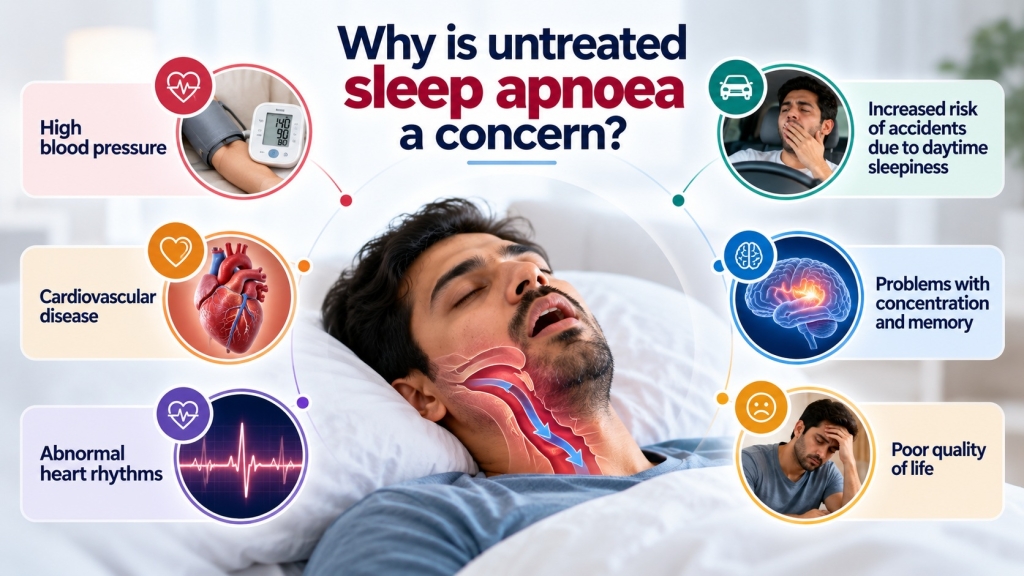
Repeated interruptions in breathing can cause intermittent drops in blood oxygen levels and repeated activation of the body’s stress response. People who are excessively sleepy during the day may have difficulty driving or operating machinery safely. Over time, untreated sleep apnoea has been associated with conditions including:
- High blood pressure
- Cardiovascular disease
- Abnormal heart rhythms
- Increased risk of accidents due to daytime sleepiness
- Problems with concentration and memory
- Poor quality of life
How is sleep apnoea diagnosed?
A doctor will usually take a detailed sleep and medical history and may perform a physical examination. A sleep study, also called polysomnography, can monitor breathing, oxygen levels, heart rate, brain activity and other parameters during sleep. In selected cases, a home sleep apnoea test may be appropriate. The diagnosis and severity of sleep apnoea help determine the most suitable treatment.
How is sleep apnoea treated?
Treatment depends on the cause and severity.
Lifestyle changes: For people who are overweight, gradual weight reduction can improve symptoms. Other measures may include avoiding alcohol close to bedtime and adopting appropriate sleeping positions.
CPAP therapy: Continuous positive airway pressure, or CPAP, delivers a steady flow of air through a mask to help keep the airway open during sleep. It is a commonly used treatment for obstructive sleep apnoea.
Oral appliances: Certain patients may benefit from specially designed oral appliances that help maintain airway opening during sleep.
Surgery: Surgical treatment may be considered in selected patients when anatomical abnormalities contribute significantly to airway obstruction.
What about snoring without sleep apnoea?
Simple snoring may not require the same treatment as sleep apnoea. However, frequent or increasingly loud snoring should still be evaluated when accompanied by daytime sleepiness, breathing pauses, gasping or other symptoms.
When should you seek medical help?
Snoring may be easy to dismiss, but it can sometimes provide an important clue to an underlying sleep disorder. It is important to speak to a doctor if:
- Your snoring is loud and frequent
- Someone notices pauses in your breathing
- You wake up choking or gasping
- You feel unusually sleepy during the day
- You have unexplained morning headaches
- Your sleep is consistently unrefreshing
Expert Opinion
“Snoring may seem harmless, but loud or persistent snoring can sometimes be a sign of obstructive sleep apnoea. Being overweight, nasal blockage, enlarged tonsils and certain anatomical factors can increase the risk. Frequent night-time awakenings, daytime sleepiness, morning headaches or pauses in breathing during sleep should not be ignored. Timely evaluation can help identify the cause and prevent potential complications.”
-Consultant Pulmonologist
-Desun Hospital, Kolkata
Good sleep is not a luxury. It is an important part of long-term health.
At
Desun Hospital Kolkata, appropriate evaluation can help identify the cause of persistent snoring and determine whether sleep apnoea or another condition may be involved.
 90 5171 5171